
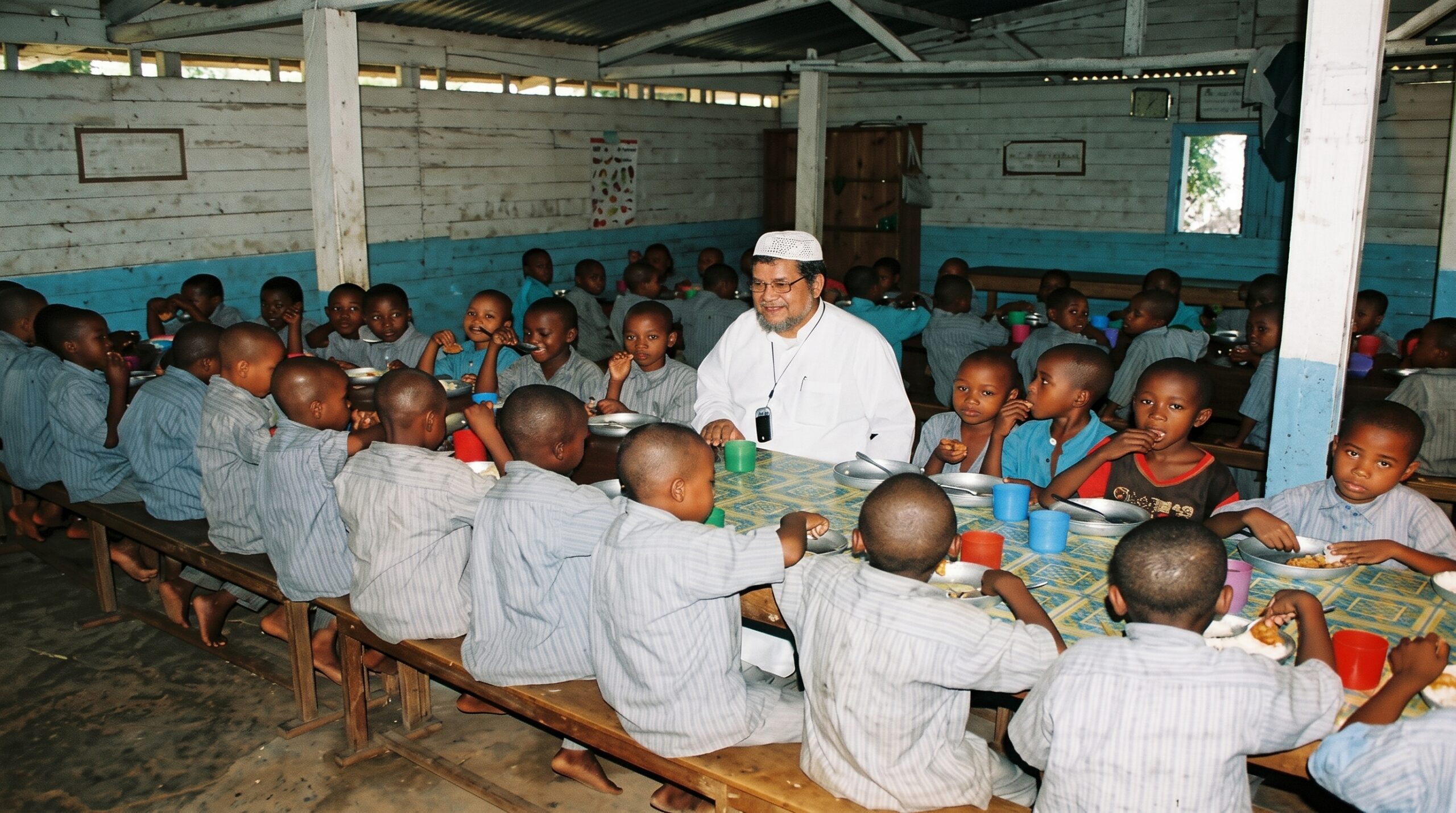
Dr. Abdul Rahman Al-Sumait, may God have mercy on him, eating with the orphans
IN HIS OWN WORDS
In the May 2005 issue of Al-Kawthar magazine, Dr. Abdul Rahman Al-Sumait described his visit to the orphanage established by the Africa Muslims Committee in the city of Mahajanga, in northwest Madagascar. He slept among the orphans, ate with them, and recorded their day from the dawn call to prayer to the bedtime remembrances: one orphan calls the adhan, another leads the prayer, and another reads a hadith in Arabic and then translates it for the local people.
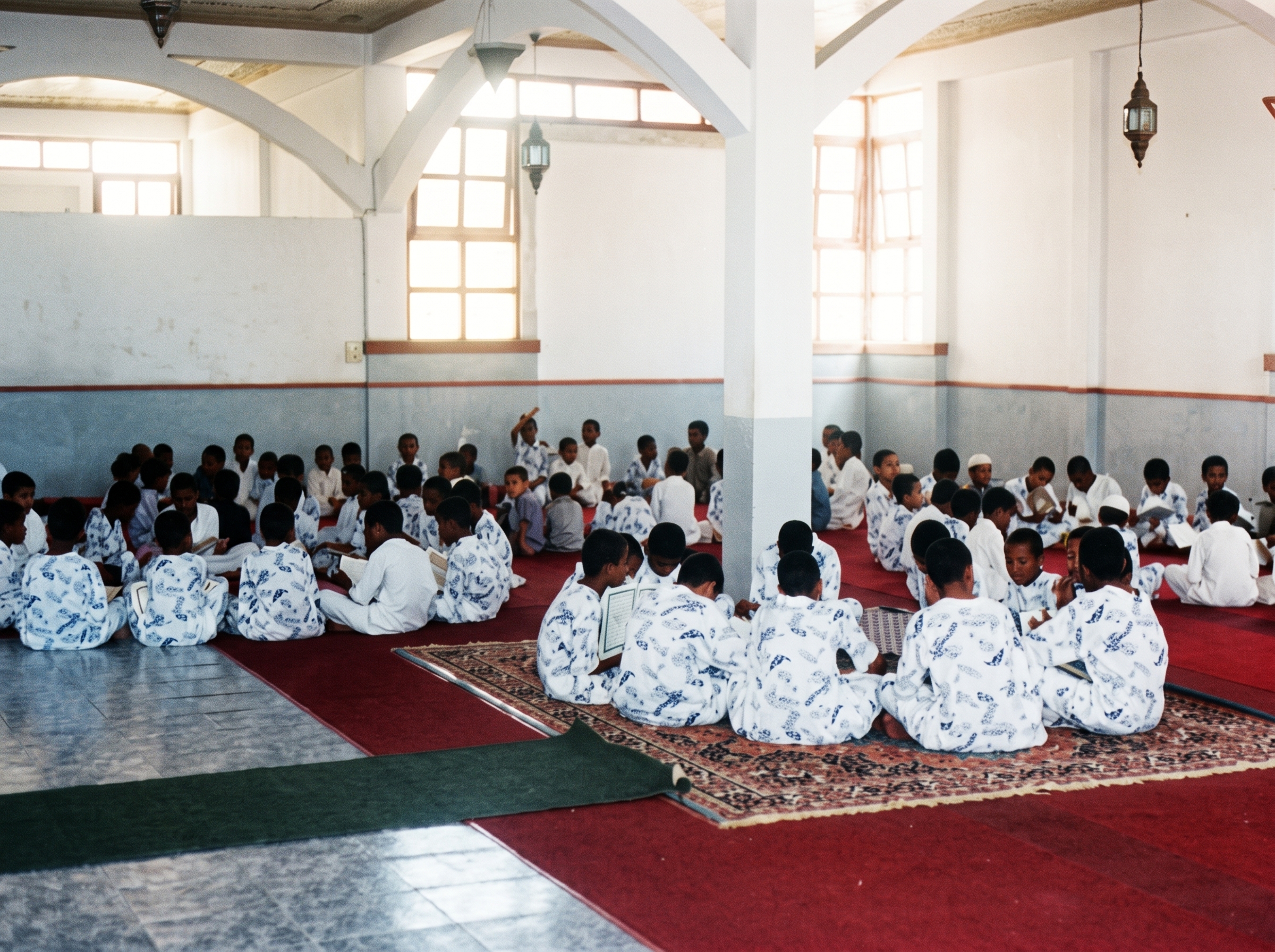
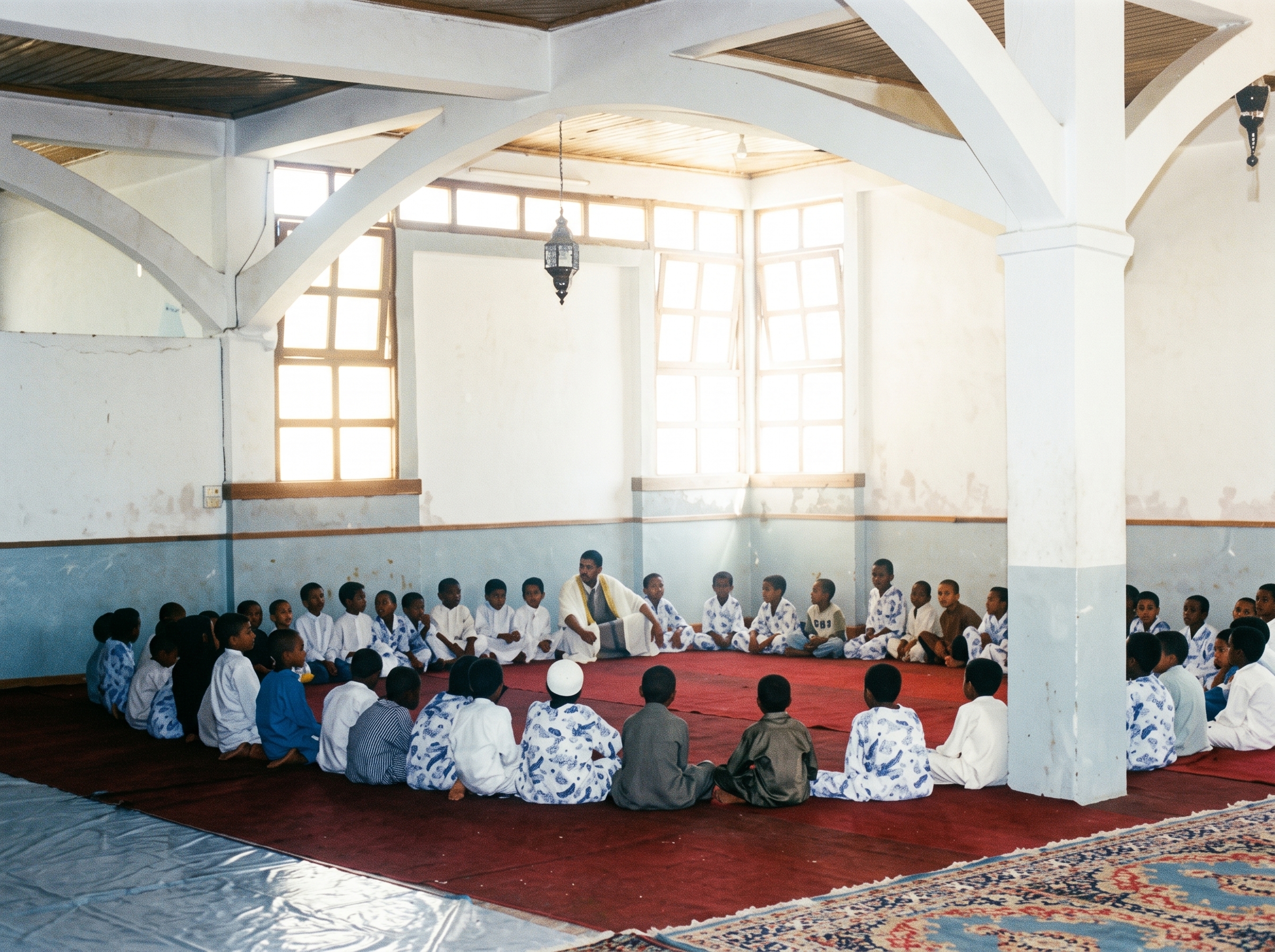
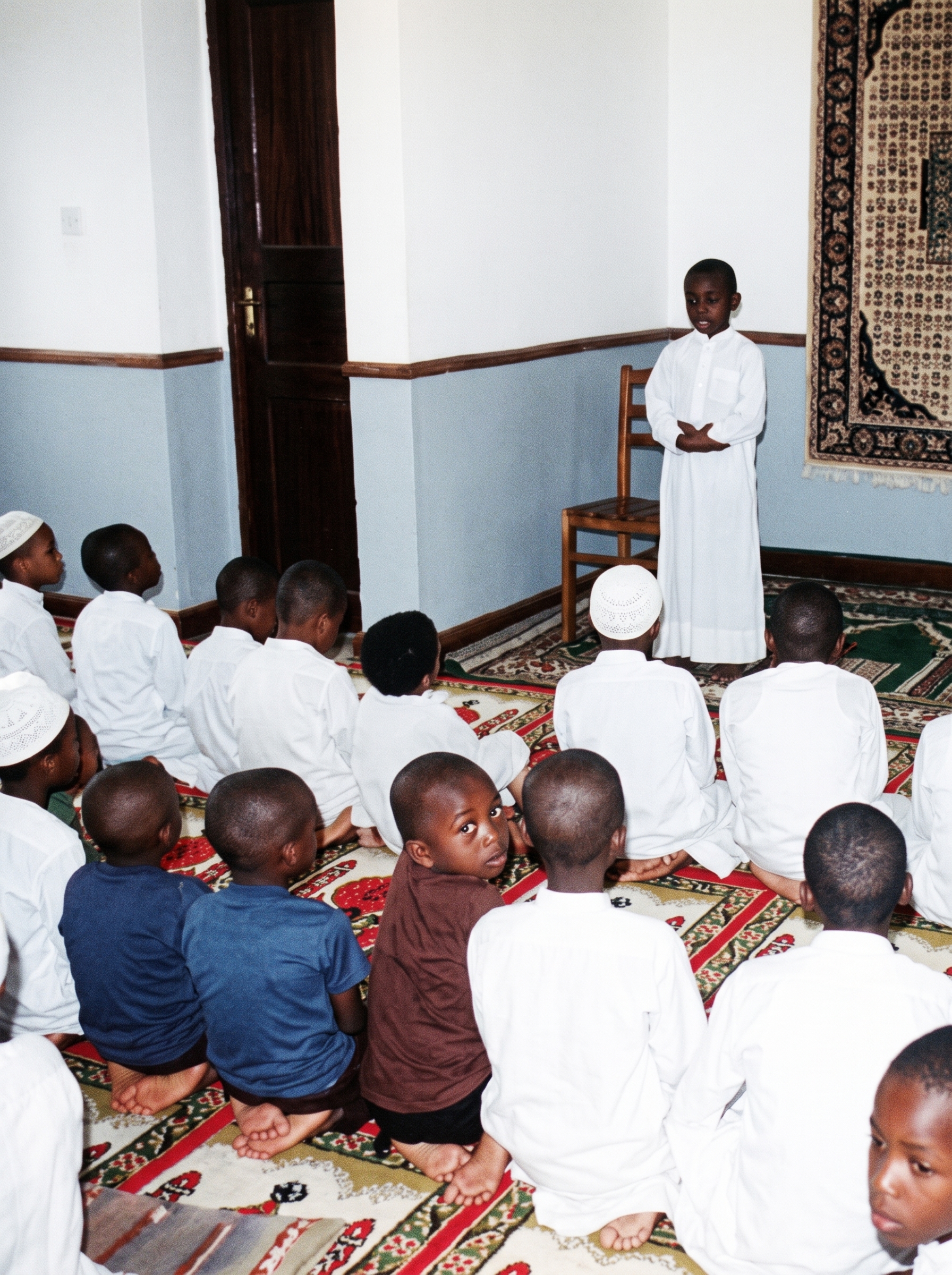
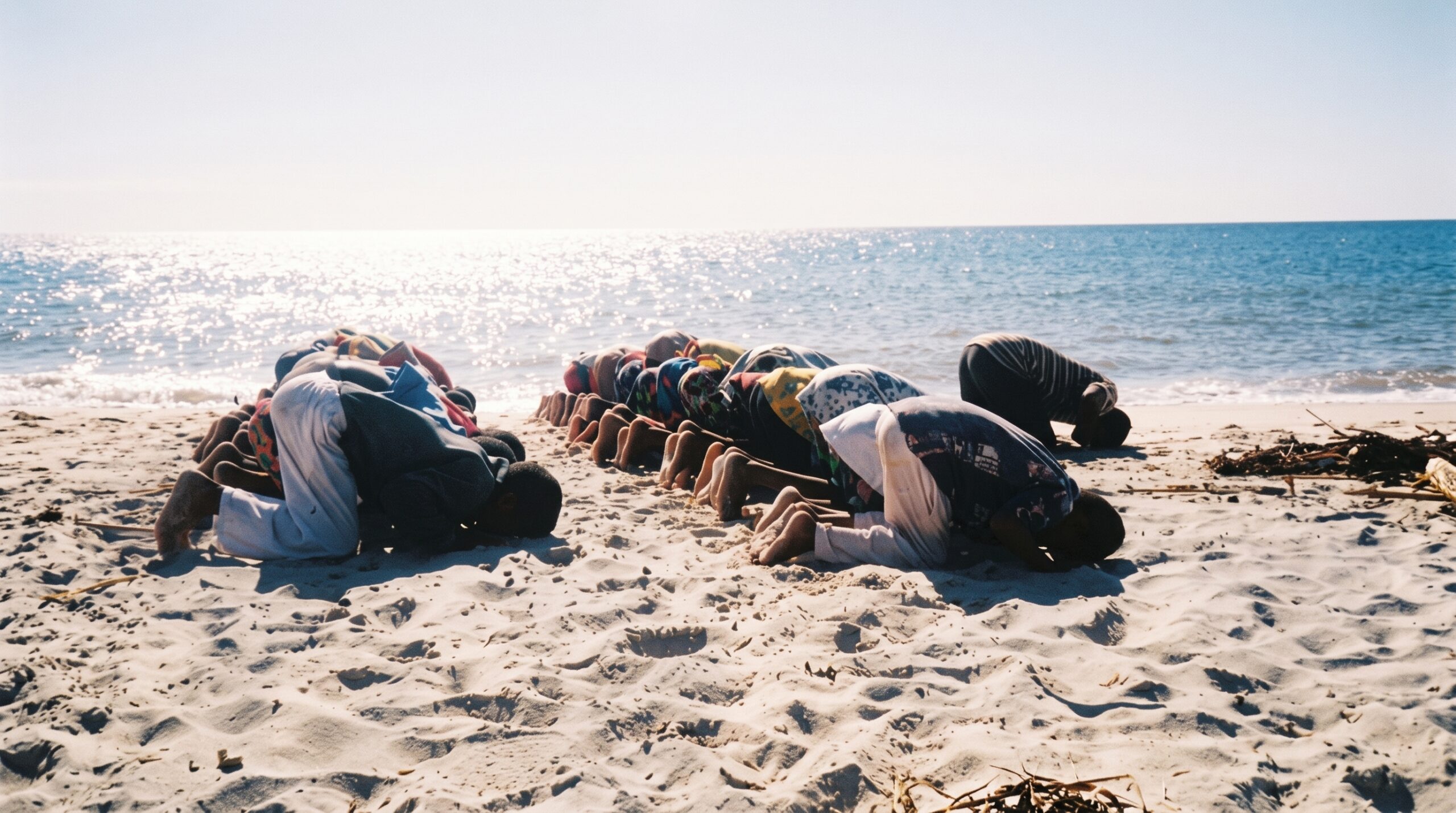
Accompanied by my young son Abdullah, a student at the faculty of veterinary medicine, and brother Salah, who works as a warehouse manager at an institution, I visited the city of Mahajanga in the northwest of the island of Madagascar. When we reached our center there, I made a point of spending the night in the orphanage that the Africa Muslims Committee established in the city, for there is great joy in sleeping among the orphans, eating with them and joining in their play. One of the orphans called the adhan for the dawn prayer in the mosque, which was full of all the orphans despite their young age, and then one of them, aged 11, led us in prayer. After the prayer the orphans formed five circles according to level; each circle recited its daily portion of remembrances, and then the recitation of the Qur’an began according to each circle’s level. Some have memorized five juz’, some three, and some are still on Juz’ ‘Amma — but the voices of the little ones reciting the Qur’an are something one can never forget.
Restored archival photographs
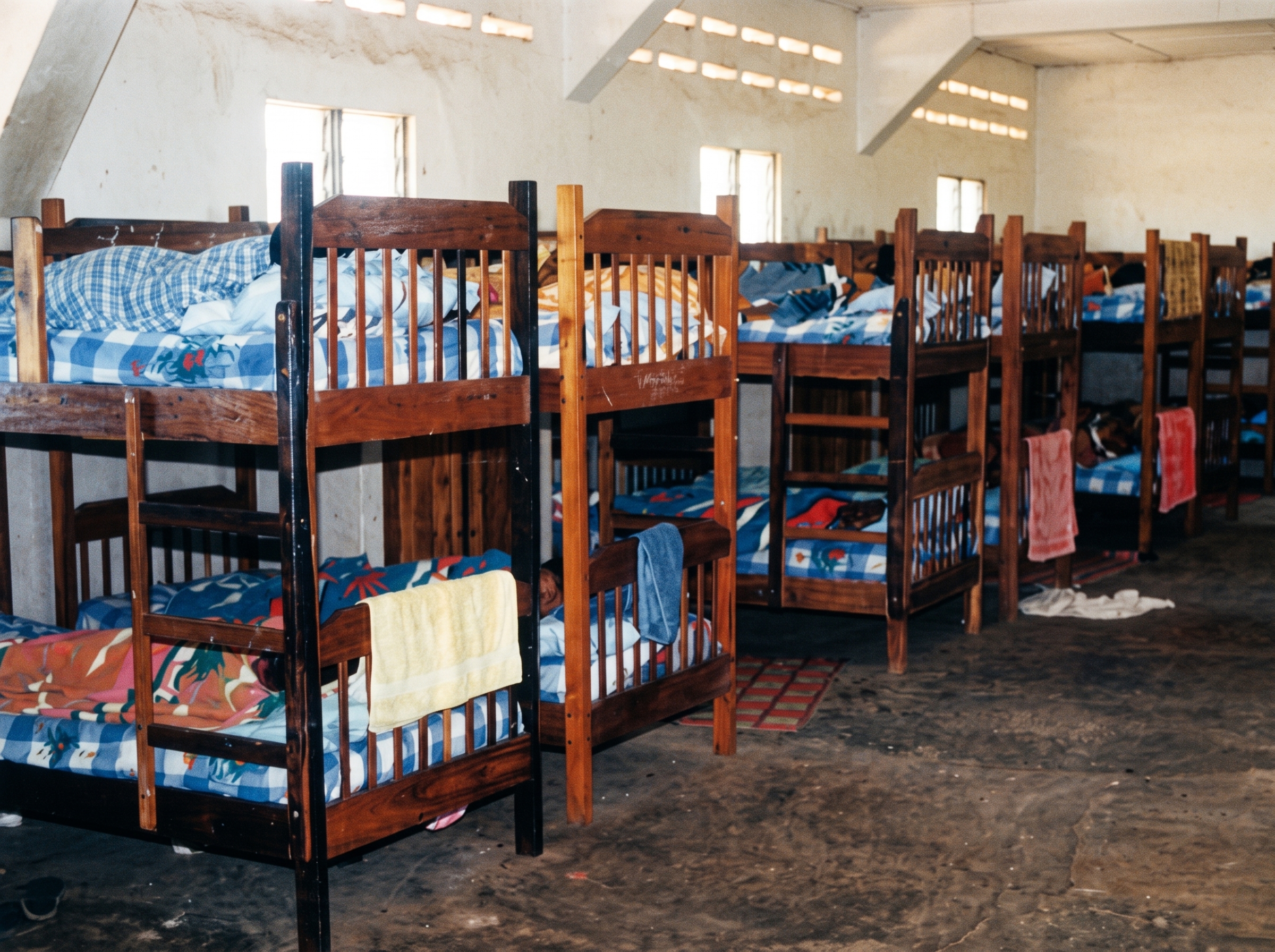
Afterwards they walked out in single file to the dining hall for breakfast. They had already made their beds and bathed before the prayer, in water cold even for the likes of us — yet they are used to bathing in it. Each of them returned his plate to the kitchen, then they went to the dormitories to fetch their books and school supplies; a local businessman had donated a school bag to every orphan. They kept studying until the call to the noon prayer, then prayer in the mosque, then lunch — and such is their daily routine.
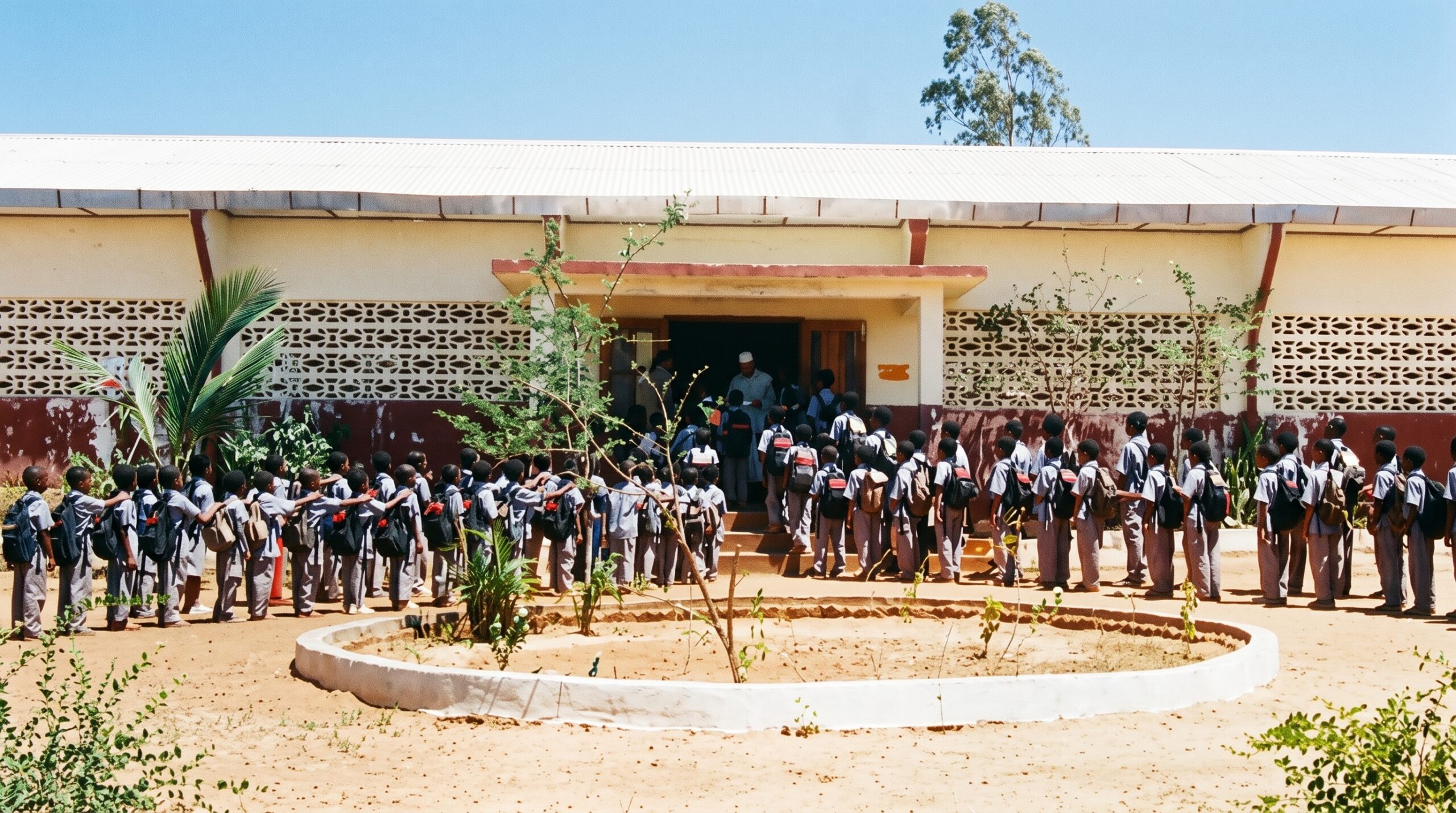
Restored archival photographs
In the afternoon, at the noon prayer, their sandals were lined up neatly near the mosque entrance without getting in the way of worshippers, and another orphan led us in prayer. Then one of the orphans stood up after the prayer and read a hadith of the Prophet, peace and blessings be upon him, in Arabic, then translated it into the local language. There was a rest period of about 45 minutes, after which they returned to school until four o’clock. Then some of the students who were behind in their studies stayed for extra lessons, while the rest spread out among various activities: sports, scouting and hobbies.
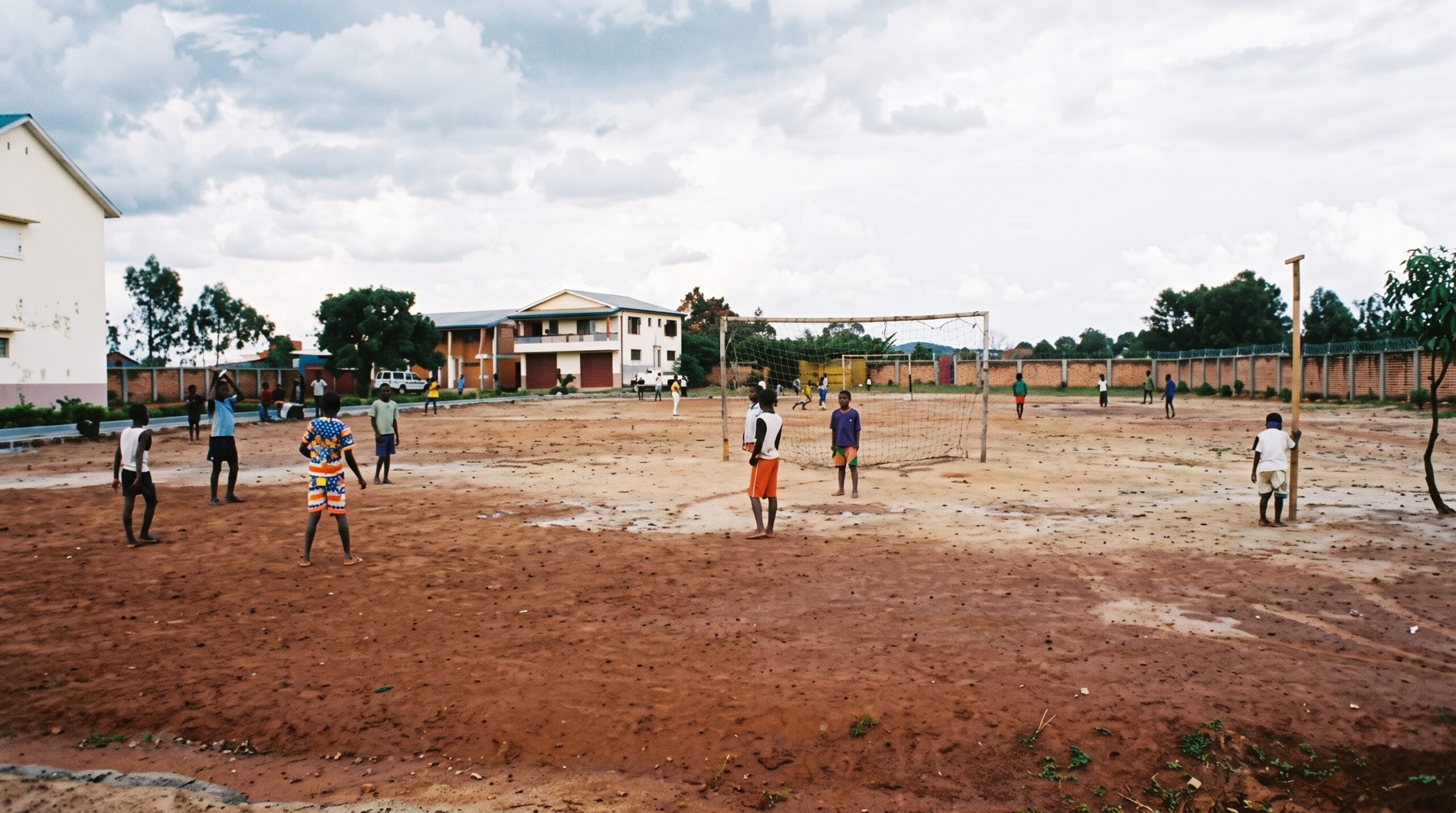
Restored archival photographs
Then came the time of the sunset prayer, when yet another orphan led us as imam, to train them in leadership and self-confidence. Another orphan then recited a verse of the Qur’an with its explanation in the local language, opening the period of dinner and study until the night prayer. Study then continues until nine in the evening, when bedtime begins after the traditional remembrances.
“The voices of the little ones reciting the Qur’an are something one can never forget”
The orphanage in Mahajanga, northwest Madagascar
Praise be to God, the school ranks among the top schools in the region, and the orphans have always been among the top students in the primary certificate and other exams. Even in mathematics and other subjects they excel. Their memorization of the Qur’an, though they are non-Arabs, is a source of wonder, and perhaps that is the reason for their academic excellence, for it has been shown that memorizing the Qur’an develops intelligence, strengthens memory and makes it easier to learn the fundamentals of school subjects.
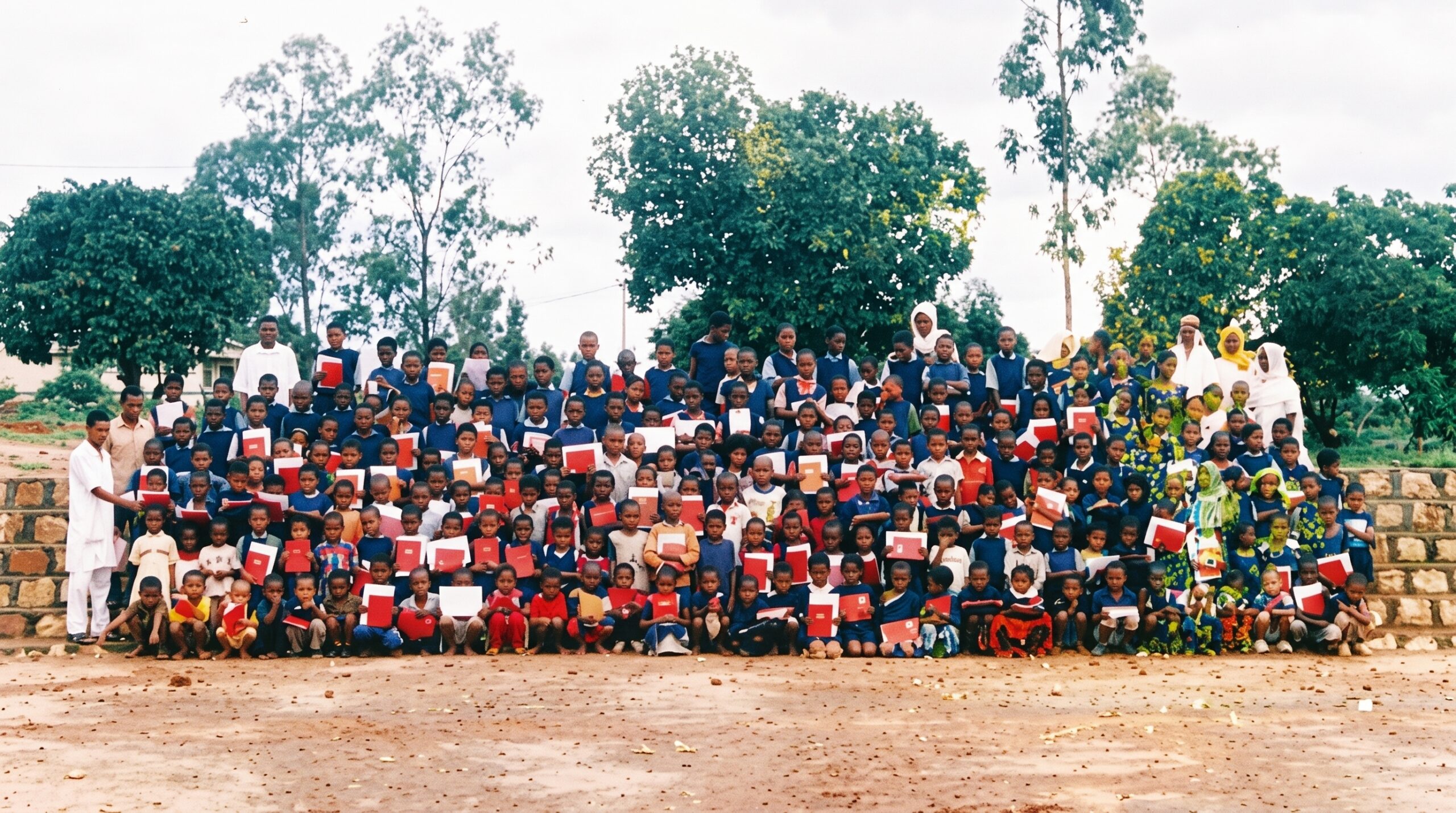
Among the stories of the little ones: one of the young orphans cried a great deal when the holidays came, for he wanted to stay at the center when we asked him to go to his mother, who lives in a distant village. He came back the next day with her, and she begged us to keep him at the center even though the orphans’ dormitories were empty; she said her son had not stopped crying since he got home.
Likewise, three years ago twelve of them finished primary school and joined the nearest intermediate school, which belonged to the church, as they had no other choice. The church school chose nine of them for its football team, and our orphans were the top students. When we began building our own intermediate school, the church men came and asked us to leave our orphans with them, because they had raised the standard of their school.
I learned that they had visited the textile factory one weekend, and that the older ones, over 10 years of age, spread out to most of the mosques in the area after the sunset prayer, where each of them read a hadith in Arabic and then translated it into the local language. Most of the worshippers wept and rose to kiss the orphans’ heads and stroke them; they said they were old men, and yet they had never known the meanings of these hadiths. I left the center, and I will never forget their recitation of the Qur’an, their reading of the hadiths, their Islamic songs and their little plays that plant sound values in the soul. I left these orphans as if I had left a part of my heart among them.
About the Center
Restored archival photographs
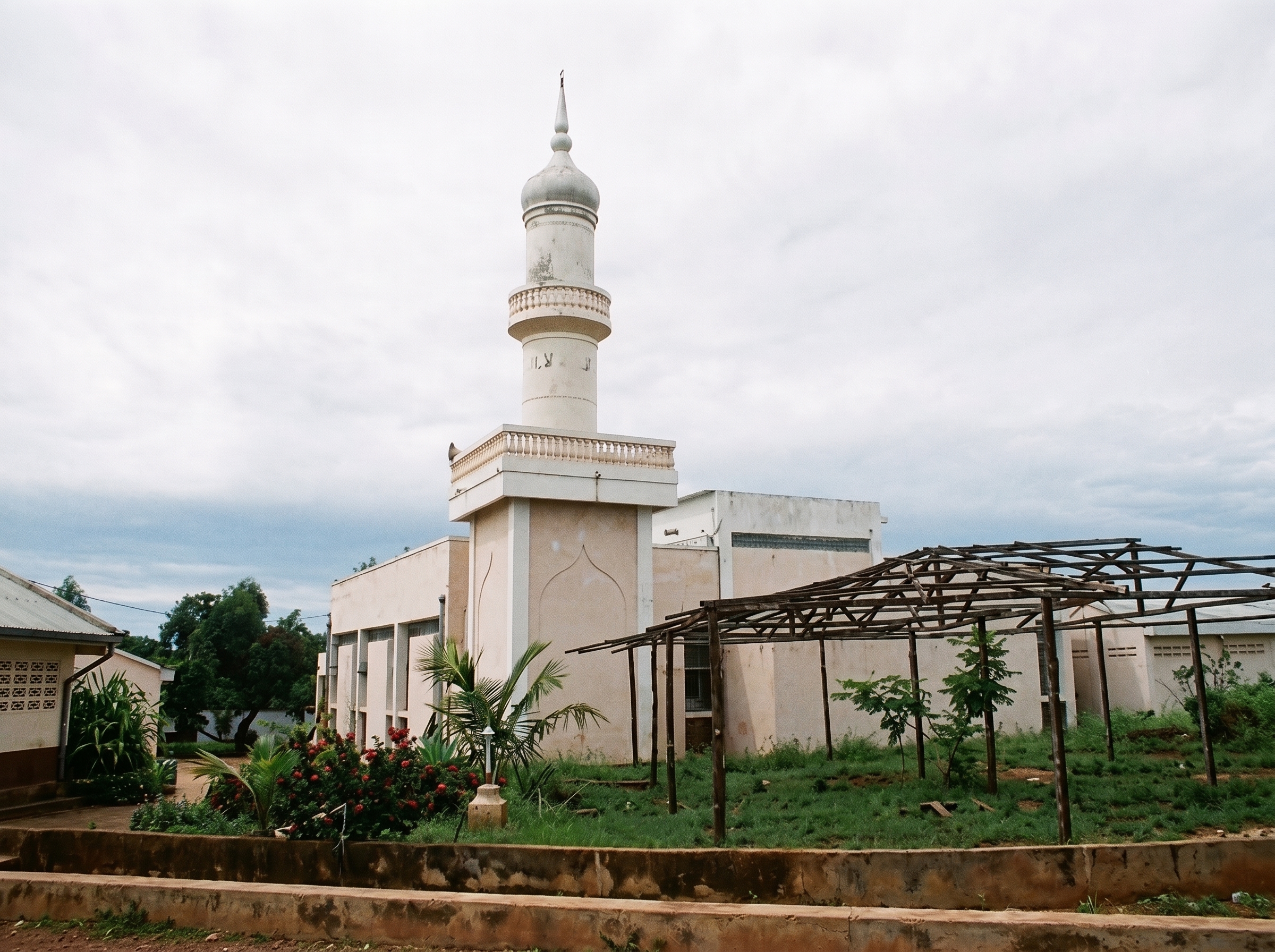
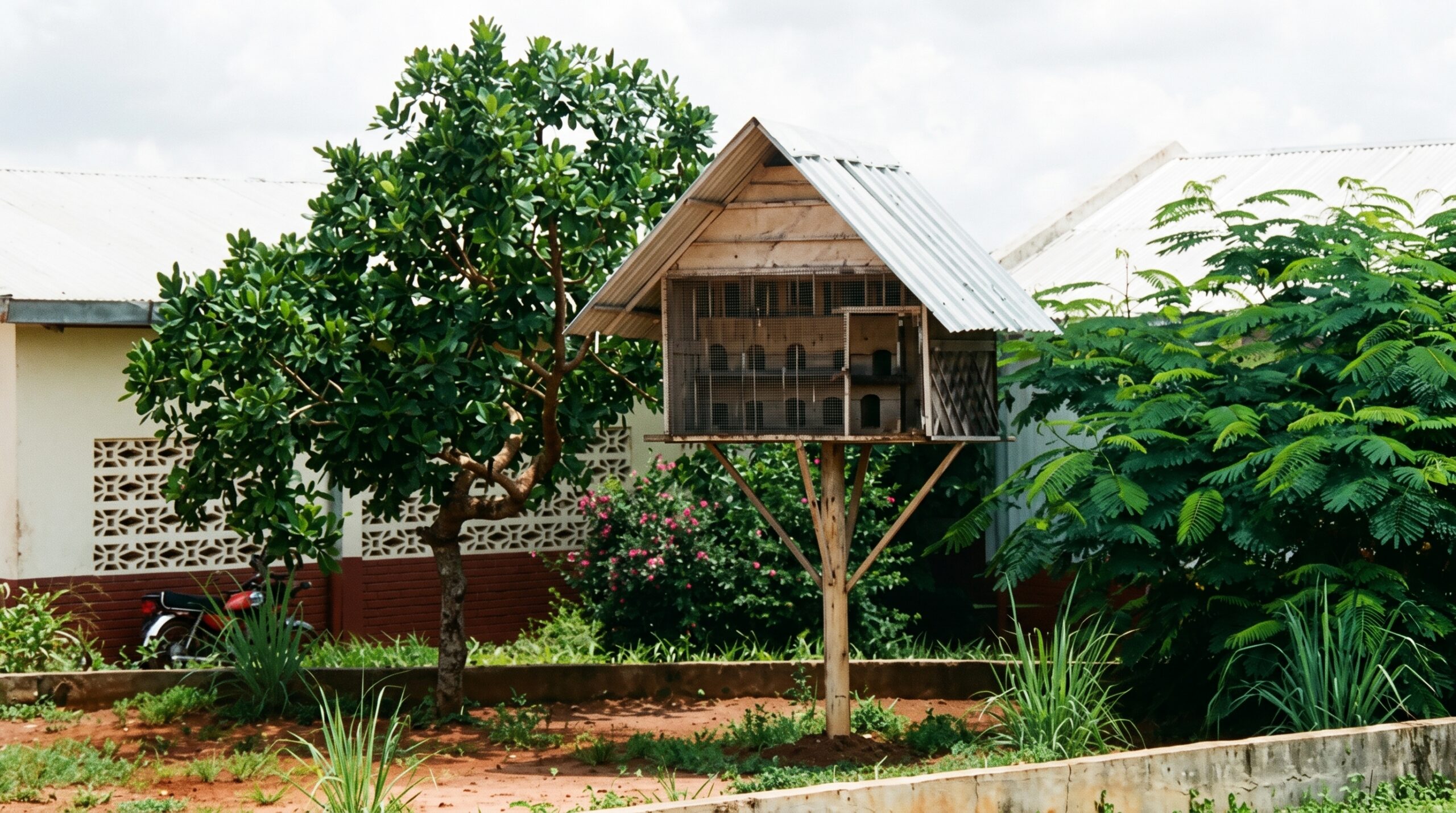
This center was established in 1997 on a plot of 75,000 square meters. It includes a primary school and an intermediate school, an orphanage housing 150 orphans, a mosque, a center training poor women in sewing and literacy, a poultry farm, a library, a religious institute that graduates preachers, a fruit farm, a water well, and housing for the director and some teachers. The project cost 250,000 Kuwaiti dinars.
SOURCE
Al-Kawthar magazine, issue 67, May 2005, p. 11 — an article written by Dr. Abdul Rahman Al-Sumait.
Translated from the Arabic for this site; the section on the orphanage’s needs is omitted.
Read next: Days in Africa: A Journey to Namakia →