02
His Life — Chapter 02 of 08
His Studies
and His Work
Kuwait · Baghdad · Liverpool · Montreal · London · 1950s – 1983
Seventeen years of medicine across four countries — a road he chose because he was told no one could pass it, ending in the one specialty that would open Africa to him.
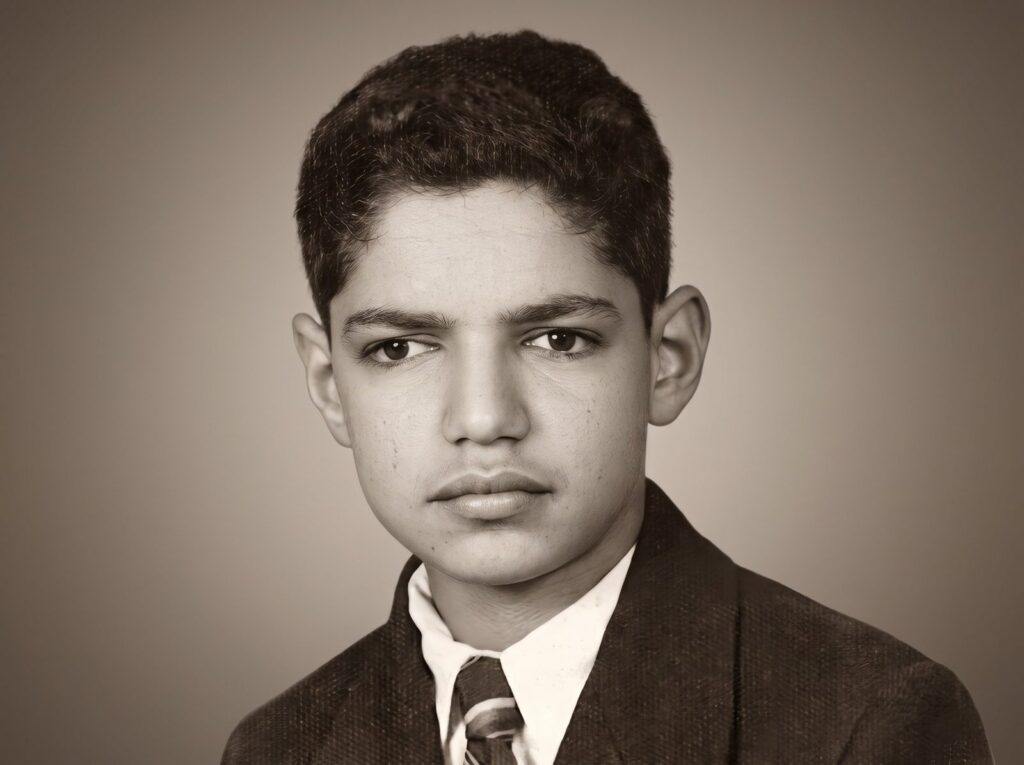
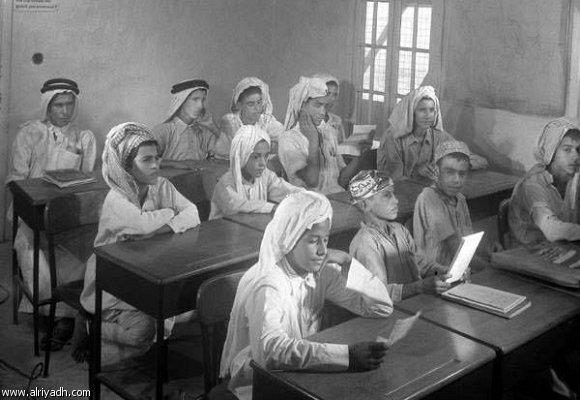
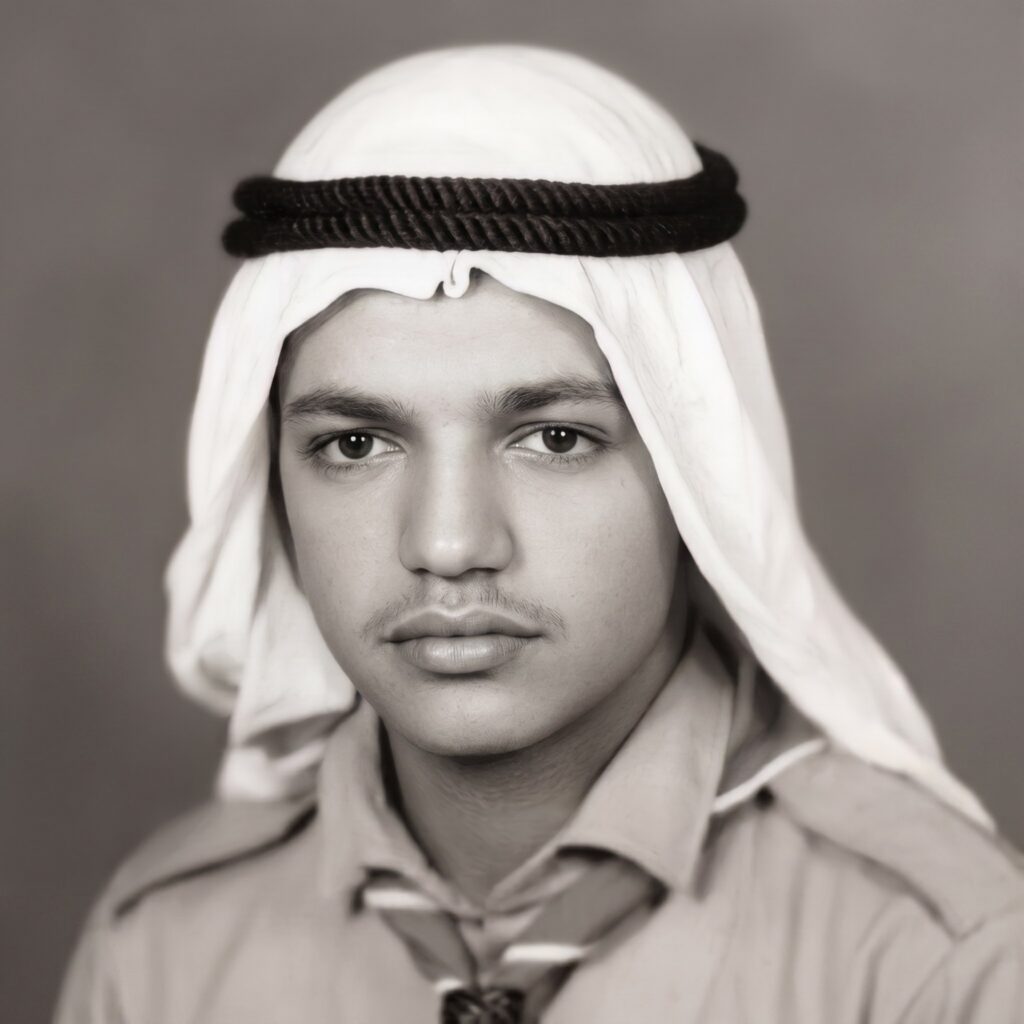
Abdulrahman Hamoud Al-Sumait received his early education in Kuwait’s schools, completing the primary stage and then the intermediate stage — four years in length — before entering Shuwaikh Secondary School in the early 1960s.
Shuwaikh Secondary is a landmark in the history of Kuwaiti education. Many of those who went on to hold posts in the state graduated from it, and it later became the nucleus from which Kuwait University was founded in 1966. It was a self-contained academic town: residences for students and teachers, sports grounds, a student clinic, and a mosque holding a thousand worshippers. Reaching it was difficult, as it lay six kilometres west of Kuwait City, and its boarding system added a further hardship for some students.
“I’m a doctor, and these are the medicines!”
At ten and eleven he would sit in the space above the rooms and below the roof, set out bowls of salt and powder, and put on a doctor’s coat.
In 1963 he completed his secondary certificate with excellent grades and went to the scholarships department to study medicine. Students at that time were sent either to Egypt or to America. While waiting to be seen, he overheard someone say to his colleagues: “There is a college of medicine in Baghdad where no one can pass.” The words kindled a sense of challenge in him.
When he entered the official’s office, he asked to be sent to Baghdad. The official was stunned, and checked whether his visitor was fully in his senses, telling him: “Students with weak grades are the ones sent to Baghdad — as a form of exile.” He nevertheless insisted. The official asked him to come back in a week; a week later he held to the same view, and so it was granted and he went to Baghdad.
“For all the generosity and fine customs the Iraqis possess, they were extremely hard — and the result was that Al-Sumait failed every subject in the first year.”
Dr. Abdulrahman Al-Sumait · Pages from My Life, Al-Majd channel (cited in the book, p. 64)
University regulations dismissed from the faculty any student who failed two subjects, and expelled from the university altogether anyone who failed more than two. As it happened, this regulation was abolished in the year of Al-Sumait’s studies, so he was not expelled even though he repeated the year three or four times, and he was able to complete his degree. He also clashed with the faculty’s professors at Baghdad University for speaking the truth plainly, at a time when the Ba’ath Party was at the height of its power.
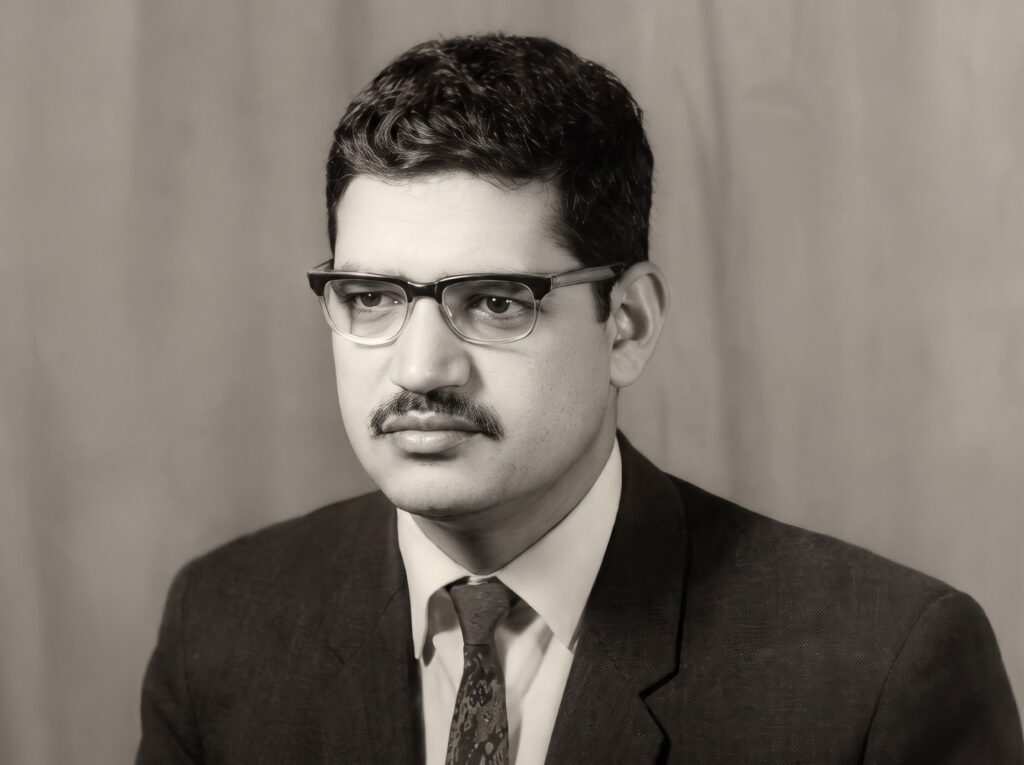
Unlike young men of his age, he had no inclination for the pleasures of food, drink or amusement. He made do with a single meal, tried during his university years to live the life of the poor, rarely ate twice in a day, and spent what money remained on books. In the year of the Naksa, 1967, he left for Palestine to fight alongside the fedayeen without telling his family — they found the will he had written and left where they would see it. He graduated M.B.Ch.B. from the Faculty of Medicine, University of Baghdad, in July 1972.
From Baghdad he went to the University of Liverpool in the United Kingdom, obtaining a Diploma in Tropical Medicine in April 1974. Liverpool is among Britain’s long-established universities, opened in 1881; the founding of its School of Tropical Medicine began in 1899, and a number of Nobel laureates taught there — among them Sir Ronald Ross, who received the prize for his research into malaria and who served as head of the school.
Tropical medicine — the medicine of hot and equatorial regions — is concerned with the public health of communities living with heat, humidity and rainy seasons: fertile ground for germs and harmful insects, compounded by poor social and economic conditions. Its diseases include leprosy, cholera, malaria, typhoid, bilharzia, sleeping sickness, worm infestations and amoebic infection. This was the choice that shaped everything that followed: his medical studies and his knowledge of the health problems of these stricken regions “had a great effect on his relief and charitable work across thirty-four years.”
He then travelled to Canada to specialize in gastroenterology and internal medicine, training at McGill University’s Montreal General Hospital — in internal medicine and then in gastroenterology as a practising physician — from July 1974 to December 1978. Montreal General was formally founded in 1821 as a teaching hospital and forms part of the McGill University Health Centre. During this period he published a number of scientific papers on the colon and on the endoscopic examination of cancerous tumours.
From January 1979 to December 1980 he researched liver cancer at the University of London — King’s College Hospital, a teaching hospital in central London whose graduates include Sir James W. Black, the Scottish physician and pharmacologist awarded the Nobel Prize in Medicine in 1988. He then returned to Kuwait, working as a consultant physician in gastroenterology at Al-Sabah Hospital from 1980 to 1983 — the best known and longest-established of Kuwait’s hospitals, opened in 1960 as the first and largest project of the Ministry of Health.
Glossary
Tropical Medicine · طب المناطق الحارة
The branch of medicine concerned with the epidemics and parasitic diseases of hot and equatorial regions — the specialty that prepared him for Africa.
Glossary
Naksa · النكسة
“The Setback” — the Arab defeat of June 1967. In its year he left Baghdad for Palestine to fight, leaving a written will behind him.
Glossary
M.B.Ch.B. · بكالوريوس الطب والجراحة
Bachelor of Medicine, Bachelor of Surgery — the primary medical degree in the British system, which Iraq followed.
In his brother’s words
The flat in Baghdad
“We saw astonishing things — winter clothes still hanging on the wall in the summer months and the reverse; utensils barely enough for their simple use; their food likewise extremely plain. Their whole life was austerity and simplicity.” — Abdulsalam Al-Sumait, Abdulrahman Al-Fatih (p. 67)
Source
One book, one chapter
Sole source for this page: Abdulrahman Al-Sumait — A Legend of Relief Work, Abdulaziz Saud Al-Owaid, 1437 AH / 2016 CE, Chapter Two, “His Studies and His Work,” pp. 56–77.
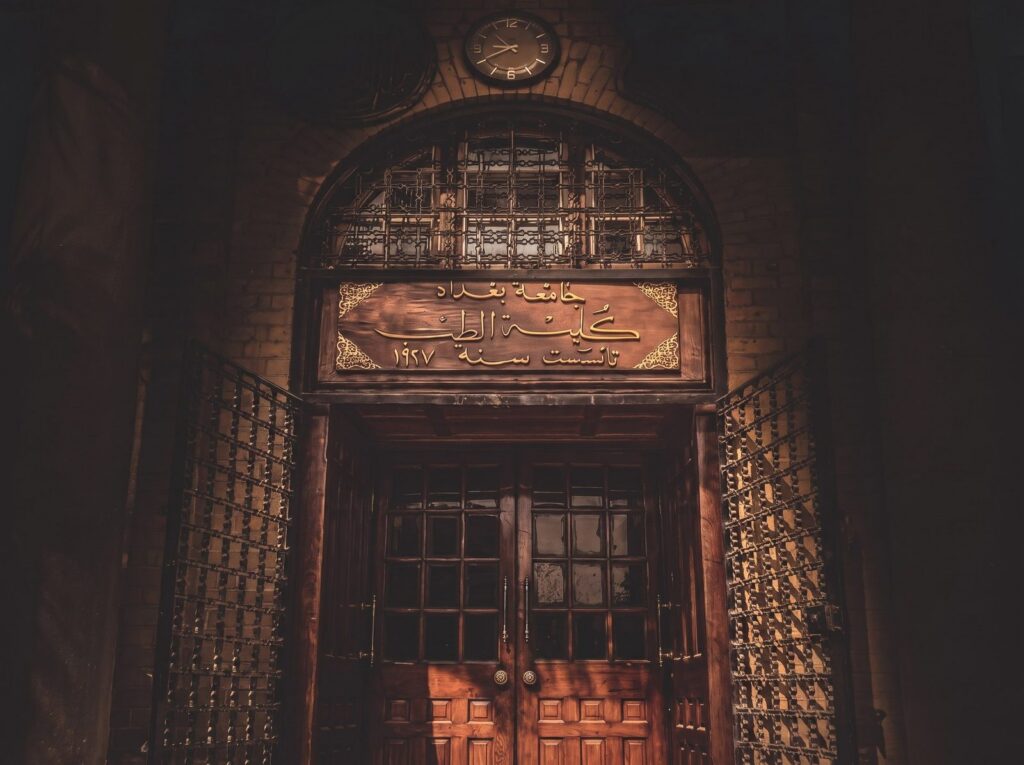
Baghdad, 1963
The road he asked for
“There is a college of medicine in Baghdad where no one can pass.” He heard the sentence while waiting his turn at the scholarships department, and asked to be sent there. The official told him that Baghdad was where weak students were sent, as a form of exile. He came back a week later with the same answer.
1927
The college he entered was founded
1963
He asked to be sent there
1972
He left it a physician
“In the year of the Naksa he went to fight alongside the fedayeen in Palestine, together with a group of young men. He did not tell us he was travelling, and we found the will he had written and placed where we would see it. But the circumstances of the Arab states at that time prevented them from reaching their goal, and they returned to Kuwait.”
His brother Abdulsalam Hamoud Al-Sumait · Abdulrahman Al-Fatih, produced and presented by Abdulaziz Al-Owaid (cited in the book, p. 66)
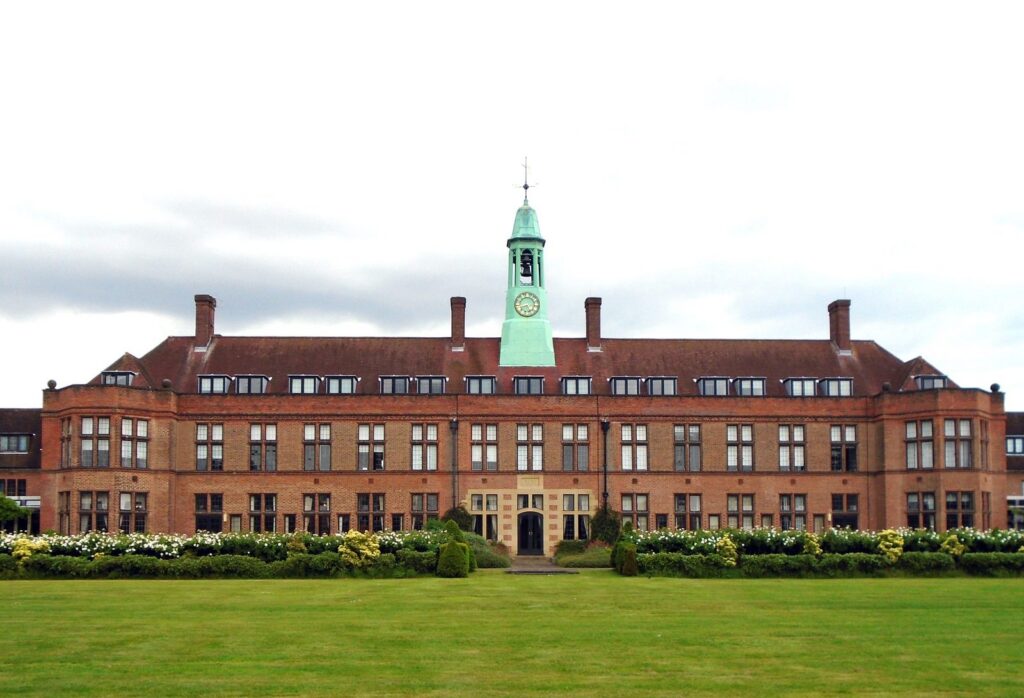
Liverpool, April 1974
The specialty that opened Africa
He could have taken any specialty. He took the one that treats leprosy, cholera, malaria, bilharzia and sleeping sickness — the diseases of the poorest places on earth. Sir Ronald Ross, who won the Nobel Prize for his work on malaria, had headed the school he studied in.
1881
University of Liverpool opened
1899
Its School of Tropical Medicine founded
9+
Nobel laureates among its graduates and teachers
The record
Scientific output
| Paper | Venue | Date |
|---|---|---|
| “Pancreatico-colonic fistula” | Canadian Medical Association Journal | 1 April 1978 |
| “The value of emergency endoscopy in gastrointestinal bleeding (a series of 150 cases)” | Gastroenterology conference, Montreal General Hospital | 1978 |
| “Carcinoma of the gastric remnant following surgery for benign ulcer” | Royal College of Physicians of Canada conference, Quebec City | February 1979 |
| “Endoscopic examination of amoeboma of the colon” | Gastrointestinal Endoscopy, issue 3, United States | 1985 |
| “Vitamin B12 as an agent in the treatment of liver cancer” | — | Unpublished |
Career summary
| Stage | Institution | Period |
|---|---|---|
| Primary and intermediate | Kuwaiti state schools | 1950s — early 1960s |
| Secondary certificate | Shuwaikh Secondary — Kuwait | to 1963 |
| M.B.Ch.B. | Faculty of Medicine, University of Baghdad — Iraq | to July 1972 |
| Diploma in Tropical Medicine | University of Liverpool — Britain | April 1974 |
| Internal medicine, then gastroenterology | McGill University / Montreal General Hospital — Canada | July 1974 — December 1978 |
| Liver cancer research | University of London / King’s College Hospital — Britain | January 1979 — December 1980 |
| Consultant gastroenterologist | Al-Sabah Hospital — Kuwait | 1980 — 1983 |
From the album
The student years
Photographs shown as archived. See Sources & Method.