المرأة الصالحة
Beside him
The RighteousWoman
In 1984 she put a ten-year-old and a baby of eighteen months into a car and drove into the Malawian bush for the summer. She did it again the next year, and for thirty years after that.
Nouria Muhammad Al-Kharsham
Married 29 July 1973
Forty years
Kuwait, 1973
He had three conditions for a wife.
She must not be a university graduate.
She must not work.
She must not drive a car.
He was twenty-six, newly qualified as a physician, and convinced that a degree, a job and a car were the marks of a woman raised in comfort. He had already been turned down more than once — the families he approached in Kuwait, and then in Saudi Arabia, found him too austere, too religious, a man going backwards.
Then he met Nouria Al-Kharsham: a degree in accounting from Kuwait University, a mathematics teacher in an intermediate school, who drove herself there every morning.
He married her on Sunday, 29 July 1973, and kept none of his three conditions. Years afterwards he told his eldest son that had he held to them, he would never have married the boy’s mother at all.
The first week
She was shown his room, and said nothing to her family for forty years.
A few days after the marriage contract, visiting his family’s house for the first time, he asked her to come up and see his room on the second floor.
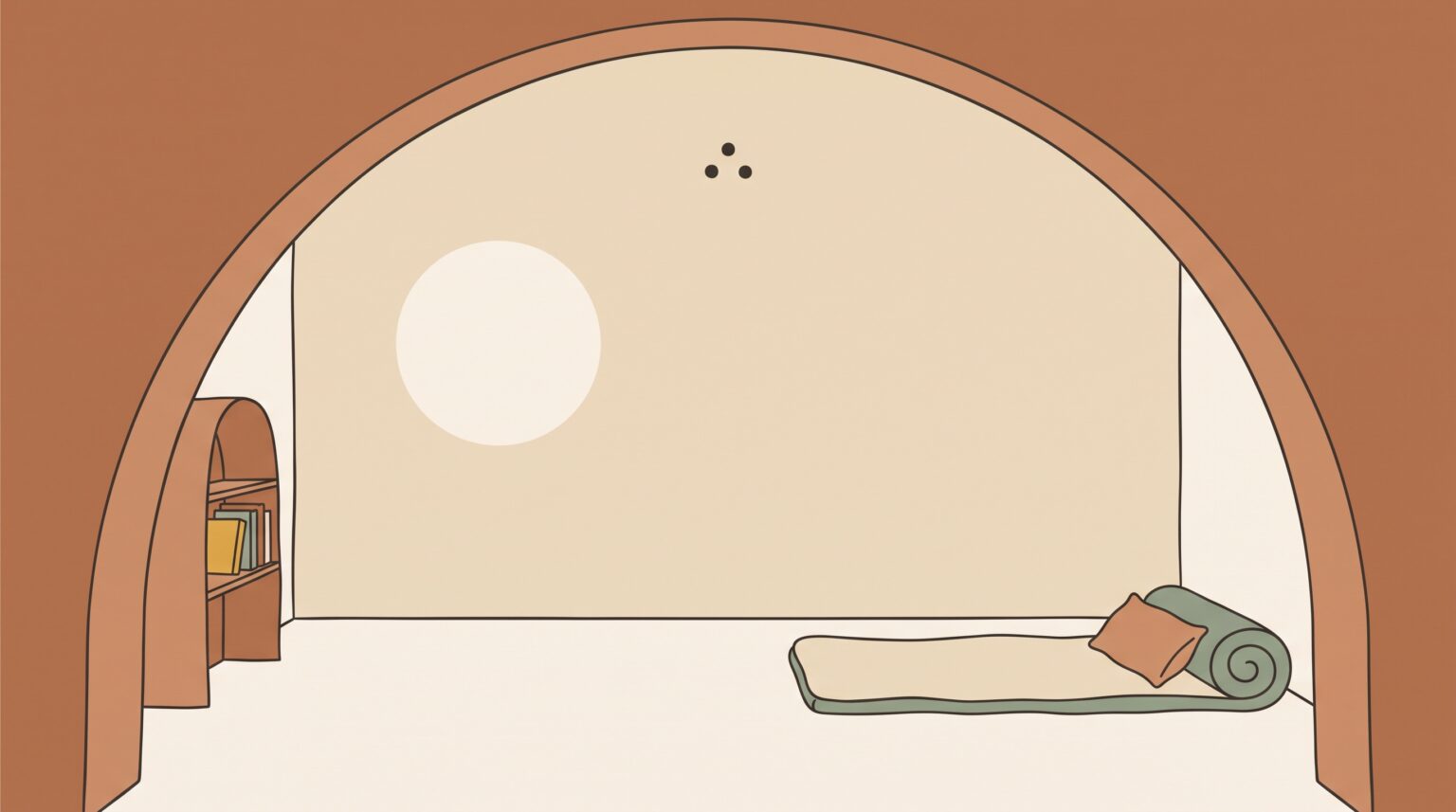
There was a mat on the floor. On the mat, a thin mattress and one pillow. Against the wall, a very modest wooden bookshelf. No air conditioning — in a Kuwaiti summer, in the house of a family that wanted for nothing.
“I was shocked by what I saw. And in that moment I was certain that I had married an ascetic, righteous man — and that I would have to accept living with him exactly as I had seen. I was content, and happy.”
She did not tell her family what she had seen. Not then, and not since. When his own family eventually pressed him, he gave in and bought a bedroom set and an air conditioner.
Malawi, 1984
For three years he went alone. In the fourth, she decided that was over.
He had been working in Africa since 1981 and travelling without his family. In 1984 she decided they would spend the summer holidays with him — not to visit, but to share the work: to live among the poor and the orphans he had been describing to them from a distance.
Asmaa, the eldest, was ten. Abdullah was eighteen months old.
Housing that was barely housing.
Food that ran short.
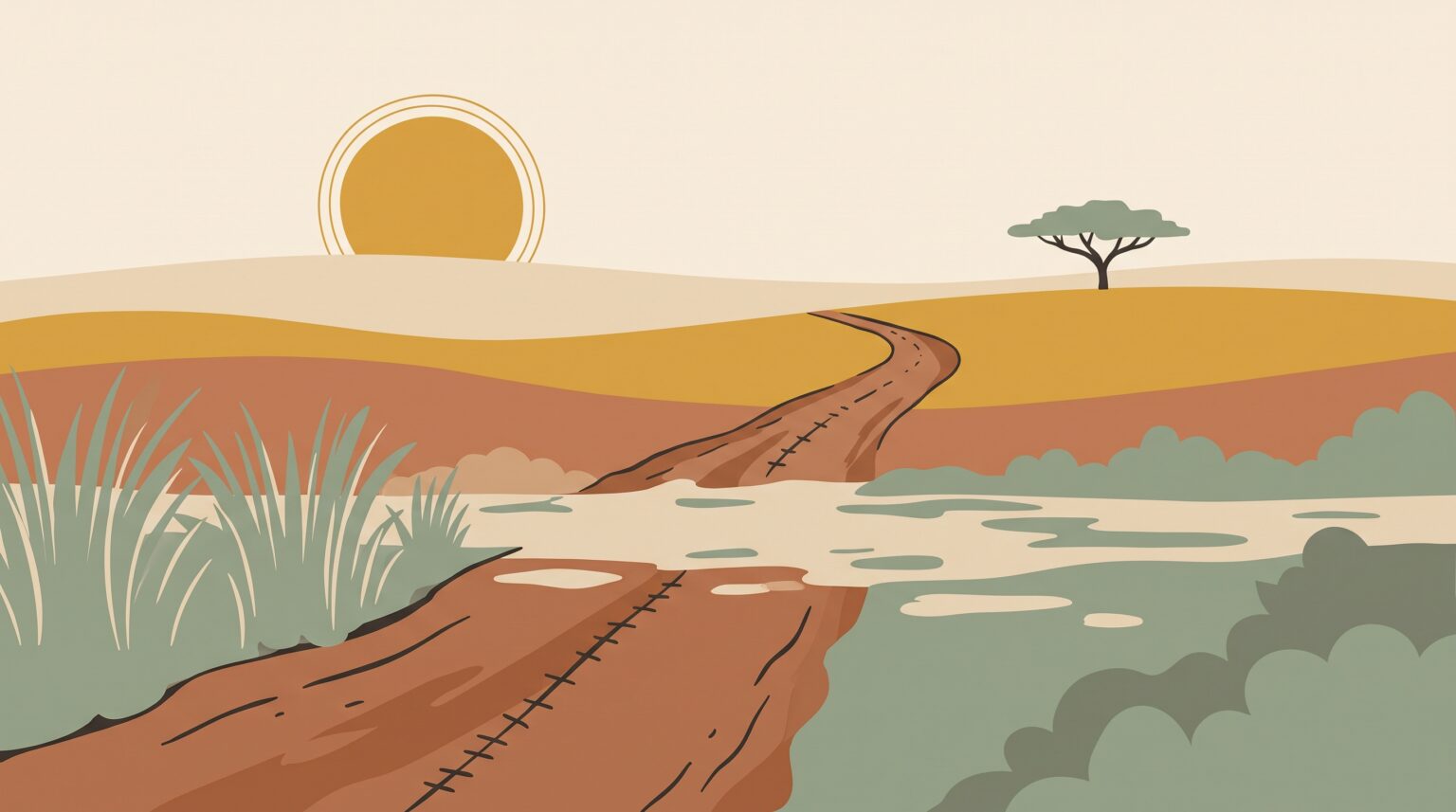
Roads that took twenty hours by car, then continued on foot through mud and swamp.
Torrential rain, then severe heat, and no cooling of any kind.
The children were ill often, and the mosquitoes left marks that lasted. She came back the next summer, and the summer after that, and for three decades she kept coming — through Kenya, Chad, the Central African Republic, Madagascar and forty other countries.
On one journey they entered a village where the people had never seen a woman covered as she was. The crowd turned. She reached the car at a run.
Recounted by her husband on “Pages from my life”, Al-Majd channel
Somewhere on a 1,500-kilometre road
She refused the hotel.
They had driven more than fifteen hundred kilometres over broken roads and arrived exhausted. The government hotel was reasonably clean. It was also, he said, not a clean place morally — and she refused to spend a single hour in it.
He told her there was no alternative: the only other option was to sleep in the bush. She said the bush was better.
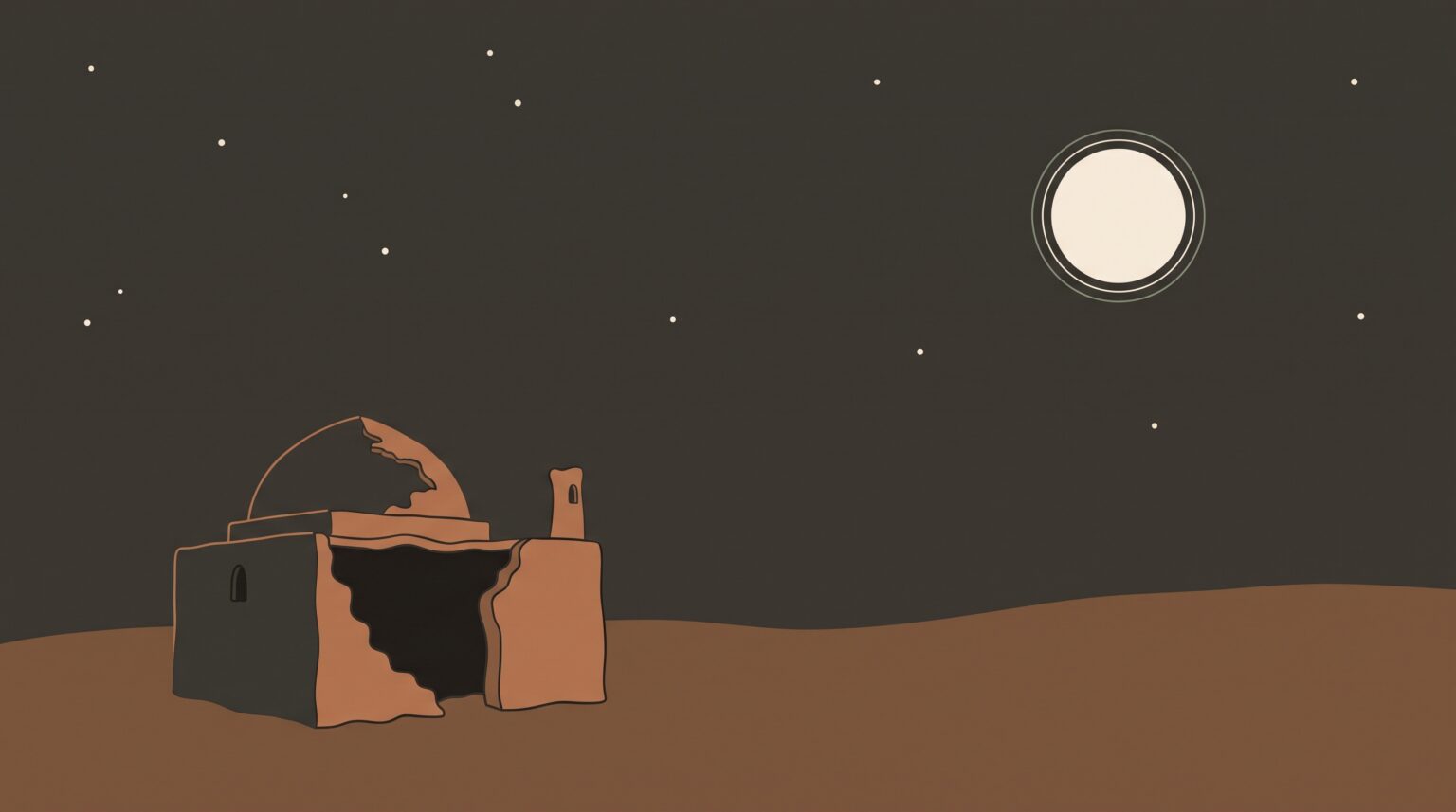
They found an old collapsed mosque on the way and spent the night on its floor. In the morning the baby’s face — Abdullah’s — was swollen shut with mosquito bites. He developed malaria from that night.
She never suggested the hotel again.
Recounted by her husband on “Abdul Rahman the Conqueror”
Canada
Five years in Canada, lived with striking simplicity.
They were not poor. He was a physician in postgraduate training, and she could have had whatever she wished. But she chose little, and turned away from much.
Showing off was not in her nature, nor extravagance in her habits.
Malawi
On Umm Suhaib’s last morning in Malawi, the farewell was a gift.
A woman arrived late to a lesson for women at the mosque, her head lowered. Asked why she was late, she said she had washed her only dress so that she could come clean, and the rain had not let it dry.
Umm Suhaib asked her to come at dawn, before they left for the airport, and handed her a new dress given by a benefactor. The woman’s joy was beyond words.
From his book A Letter to My Son
What she gave away
She did not give from what was left over.
A haemorrhage in his retina brought him back to Kuwait for treatment. With no post to return to, he went into a small trade — and it prospered. When she saw the money, she did not ask what they would buy.
“God did not create you to gather money. He created you to serve your brothers in Africa. If your children are righteous, God will take care of them; and if they are not, this money will not help them. Come — let us go back to Africa.”
Everything she inherited
When an inheritance came to her she paid all of it into the work and kept nothing for herself.
Whatever sat idle
“By God, I cannot sleep while there is money in the bank beyond our need.” — “Whenever our balance rose a little she would say it again,” he said. “So I would take it out, to please her.”
A burial ground in Madagascar
She was the one who proposed buying land and endowing it as a cemetery for the Antaimoro Muslims. “Perhaps,” she said, “we will be buried in it.”
Kuwait, the other side of the year
He was away eleven months of the twelve. She raised five children on the story of a man they barely saw.
Suhaib, Abdullah, Asmaa, Nusayba, Sumayya. Their father was in Africa for eleven months of every year and came home for one. When the youngest saw him at the door, he ran.
She did not let the absence become a grievance. She told them where their father was and what he was doing there, and why it mattered — and she raised them to give things away themselves, rather than merely to admire someone who did.
“He planted good in Africa, and we found its fruit in Kuwait.”
All five grew up practising. Most of them now give away half of what they earn. — In her own words, on “Abdul Rahman the Conqueror”
In her own voice
Three things she said that belong to no single day.
١
A night in their house in Madagascar
“Will we find in Paradise the taste of this happiness we find here?”
٢
Kuwait, before Africa
“We were created for something greater than this. We were not made to come and sit here.”
٣
On the journeys
“Sleeping in forests, in deserts, in mud mosques — all of it convinced me that what he does for his brothers is an honour for all of us.”
2001 · the hardest journey
The route ran through Kenya, Chad and the Central African Republic — a month through the bush, and dangerous enough that he tried to talk her out of it.
He asked me, half joking, to write my will before I came — or else to choose which of the animals would eat me: the lion, or the leopard. I said: the lion. So that I die a martyr, with honour.
In her own words
“Some people belittle the role of women in building civilisations. I will not say: look behind every great man for a woman. I will say I am certain that every failure had no woman behind him — or had a failing one.”
She did not use the word behind about herself. She used partner — and she meant the twenty-hour roads, the swamps, the fevers, the nights on the floor of a mud mosque, and thirty years of summers.
“Any success he achieves is a success for me and for the children. I consider myself a partner with him in every step he takes — and he tells me so himself.”
Her own work
She founded educational and development work of her own, and runs it.
Not beside him — her own. She built and directs it, and it is the part of her life we can say the least about. We are still gathering the record: the names, the years, the places, the people who passed through it.
Do you know her work?
A name, a year, a photograph, a document — anything that helps us write this section properly.