
IN HIS OWN WORDS
Dr. Al-Sumait wrote this scene for Al-Kawthar magazine in 2000, recalling a Friday from his early years in Malawi. It is not only a scene about ignorance but — as he says himself — about the neglect that left it there.
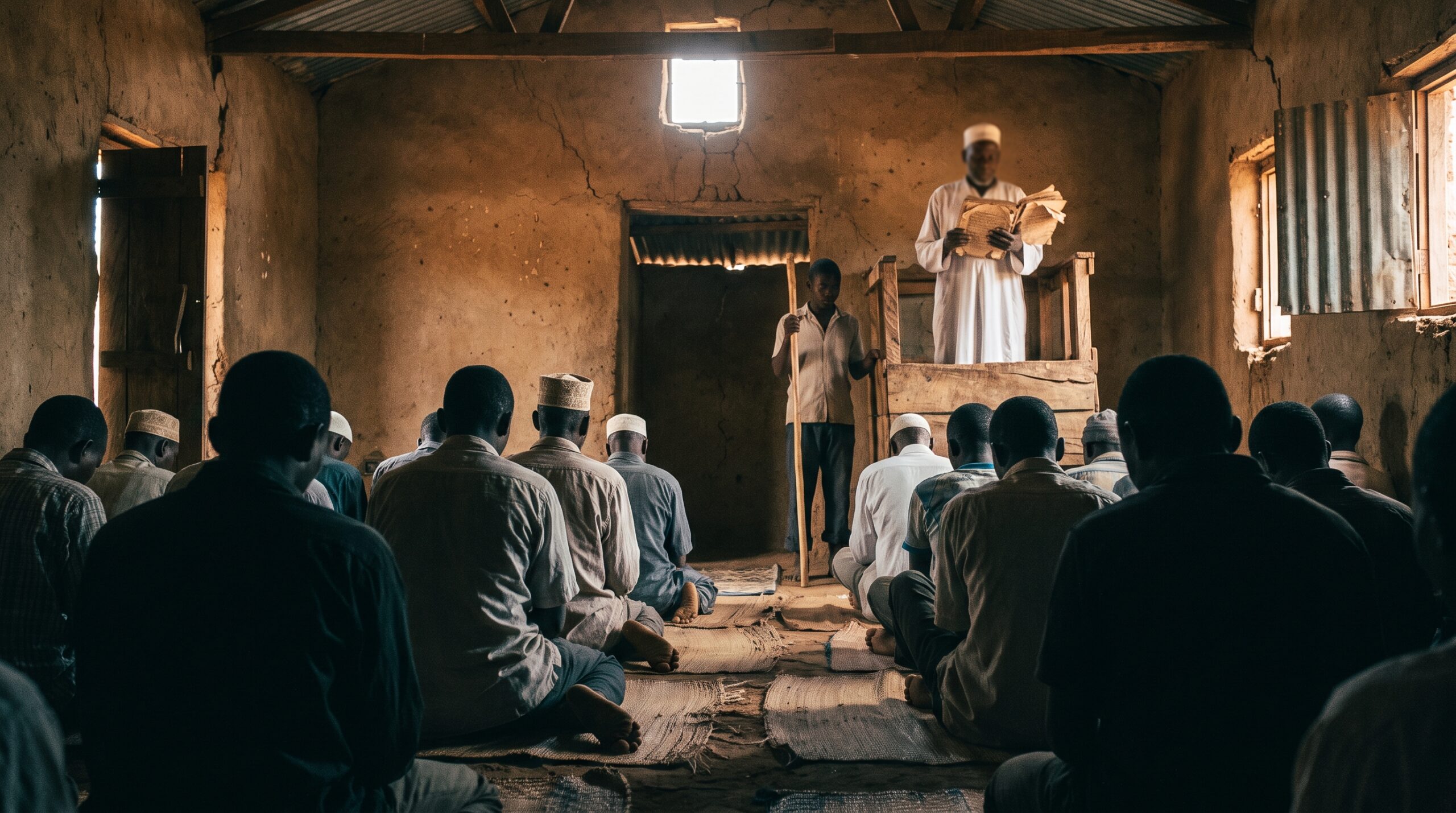
The Friday prayer found me in the town of Nkhata Bay in northern Malawi, so I made my way to the village’s only mosque — a building on the verge of collapse. I prayed the greeting prayer of the mosque and sat down to read the Qur’an, but I could not read a single word, because someone stood up and began to babble words of which I understood nothing. I later learned that what he said was supposed to be a hadith in Arabic — a language that neither he nor any of the worshippers understood — recited as part of their Friday prayer rites.
Then we heard a commotion outside the mosque, and soon a young man came in carrying a staff in his right hand and, in his left, an old, tattered book of Friday sermons in Arabic. He was chanting and remembering God at every step, then pausing, with the imam behind him, until the two reached the pulpit. The imam climbed up, and the young man stayed at the foot of the pulpit.
Then the imam began the sermon, which he was supposedly reading in Arabic. I could not make out its subject, but at the end I understood that he was praying for the Ottoman sultan Abdulaziz, “Sultan and Khagan of the Two Seas”.
I felt pain and sorrow, because the Arab Muslims have failed their brothers in so many places — so much so that this preacher was delivering an old sermon, repeating it without knowing its meaning.
In another village in Malawi, called Chikwawa, we discovered that most of the inhabitants were Muslims, yet they did not fast in Ramadan. We began teaching them the rulings of fasting, but then we discovered a strange reason for not fasting. They said:
We do not fast because we do not pray!
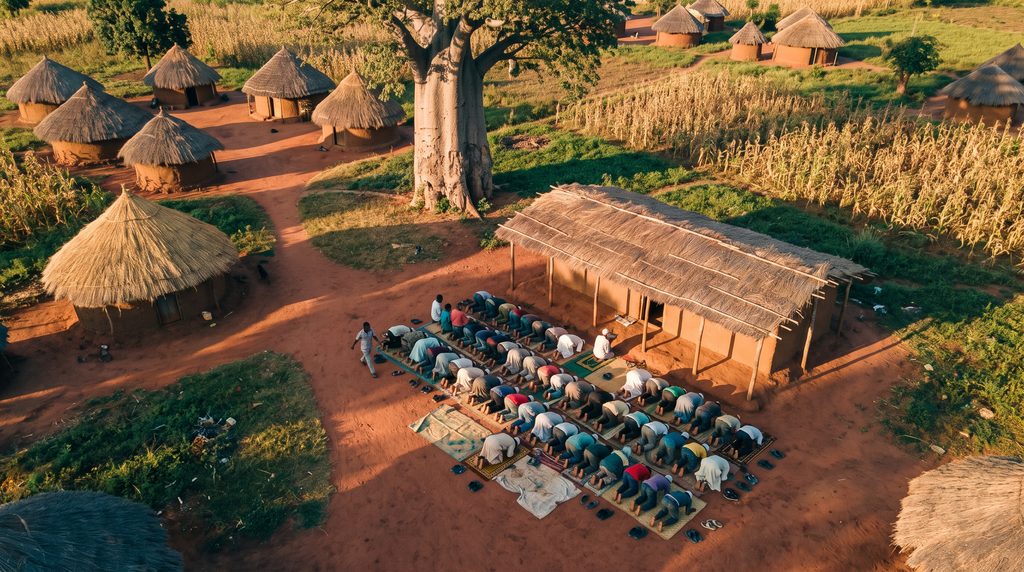
A mosque of straw
When we asked them why they did not pray, they said: there is no mosque — and where there is no mosque, there is no prayer!
We tried to explain to them that prayer is valid without a mosque, but they held to their view. Fortunately we had a prayer compass with us, so we went out with them under a tree, drew a line on the ground towards the qibla, and together with them built a mosque of straw.
We could not believe our eyes when we visited them a few days later and found the straw mosque full of worshippers.
The author of the reference biography comments: the forms of ignorance in Africa are many, and what unites them is distance from the lamps of light and weak ties with the centres of learning — and he is certain that the Doctor recorded these scenes with a heart wrung with pain at how we Muslims have failed our brothers there.
SOURCE
Al-Kawthar magazine — Issue 7, May 2000 — by Dr. Abdul Rahman Al-Sumait — as cited in the reference book (pp. 150–151).
Reference book: “Abdul Rahman Al-Sumait — The Legend of Relief Work”.
Translated from the Arabic for this site. The text is given as it appears in the source; the Chikwawa story is told in the book’s own wording, and the closing comment is its author’s.
Read next: Malawi: The Gateway to Africa →