
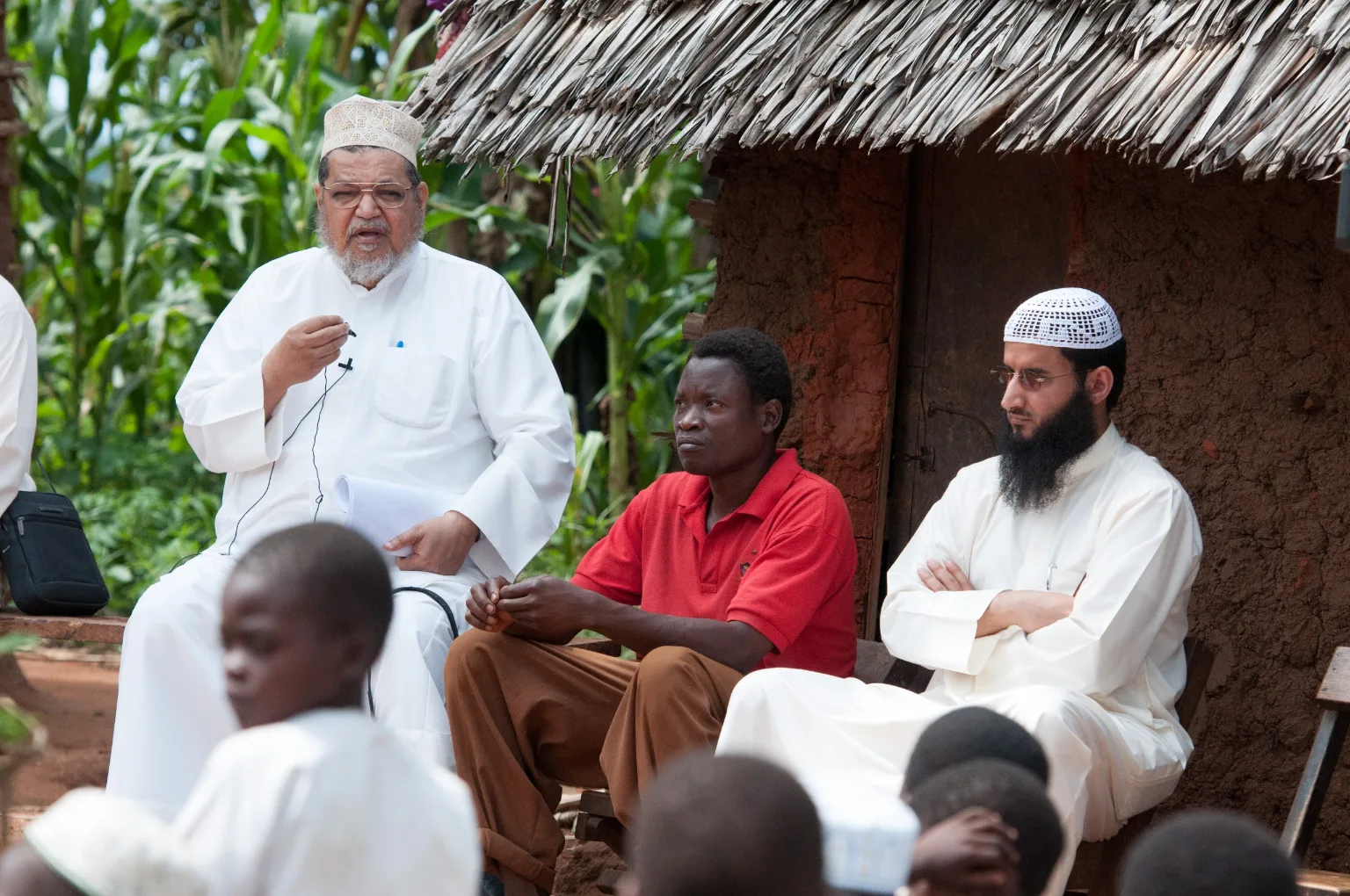
IN HIS OWN WORDS
Islam reached a region of southern Chad through a marriage proposal that was refused. Thousands followed. Then there was nobody to teach them — and Al-Sumait turns that into a rebuke aimed at Muslims far away.
The sultan of Kelo
I remember two incidents. The first was in the region of Kelo in southern Chad, when the sultan — which is the equivalent of a tribal chief with us — proposed marriage to a Muslim woman, and she refused him. He was astonished at the refusal, all the more so because he was the great chief of the tribe and a wealthy man. She told him that she was a Muslim, and that she could not marry him unless he became a Muslim.
So he asked some people about Islam. They explained a very little of it to him — all that they themselves knew — and the sultan became a Muslim.
He went into his house, gathered his wives, and told them that he could not remain with them, because they were unbelievers and he was a Muslim. After discussion and argument, question and answer, his wives became Muslim. Then came the turn of his sons and daughters. He asked them to look for somewhere else to live, because his house had become a Muslim house — and his children became Muslim.
Then the senior men of the tribe — they call them the ajāwīd — gathered one night from several villages to settle some disputes. When the food was set down and they waited for the sultan to begin eating, he refused, on the grounds that he was a Muslim and this was the food of unbelievers. After discussion, every one of the ajāwīd became Muslim. They then carried Islam back to their own villages, and thousands of them entered Islam.
But they found no one to explain the rulings of Islam to them, no one to teach them their religion. They remained Muslims in name, knowing only the little they had gathered from a few simple Muslims in the area — so little that they did not know the prayer of the Eid.
So the sultan sat down on a chair, and the people came and greeted him — instead of praying the Eid.
KELO, SOUTHERN CHAD
What we argue about
I compared these people, who are in the most desperate need of someone to teach them their religion, with some Muslims who spend long hours in argument over points of disagreement in jurisprudence — dividing a Muslim from his brother with them, and stirring up strife that splits a community apart. If only those brothers would pour what energy they have into the real work of calling people to Islam, among people such as these, and would rise above the small details, so that the fundamentals are not lost.
SOURCE & NOTE
Riḥlat Khayr fī Ifrīqiyā (A Journey of Good in Africa), by Dr. Abdul Rahman Hammoud Al-Sumait. Maṭābiʿ Mirʾāt al-Umma.
«رحلة خير في أفريقيا» — د. عبد الرحمن حمود السميط، مطابع مرآة الأمة.
Translated from the Arabic for this site. The passage is given in full, without abridgement; the headings are ours. Ajāwīd is Al-Sumait’s own transcription of the local term for the tribe’s senior men. The Arabic names the place as Kelo (Kélo) in southern Chad. Al-Sumait says he remembers two incidents and this is the first; the second is not part of this passage.
Read next: We Started Without Saying a Word →