MW
His Life — Africa · The First Stop
Malawi: The Gateway to Africa
Malawi · Lake Nyasa · One mosque · More than thirty years
From a poor, landlocked land in southeastern Africa began a journey of more than thirty years. Malawi was not a country Al-Sumait had often visited, nor one he knew much about — yet it was the first stop his feet touched on the dark continent. And from it, from a single mosque, burst forth an energy of good that changed the face of Africa.
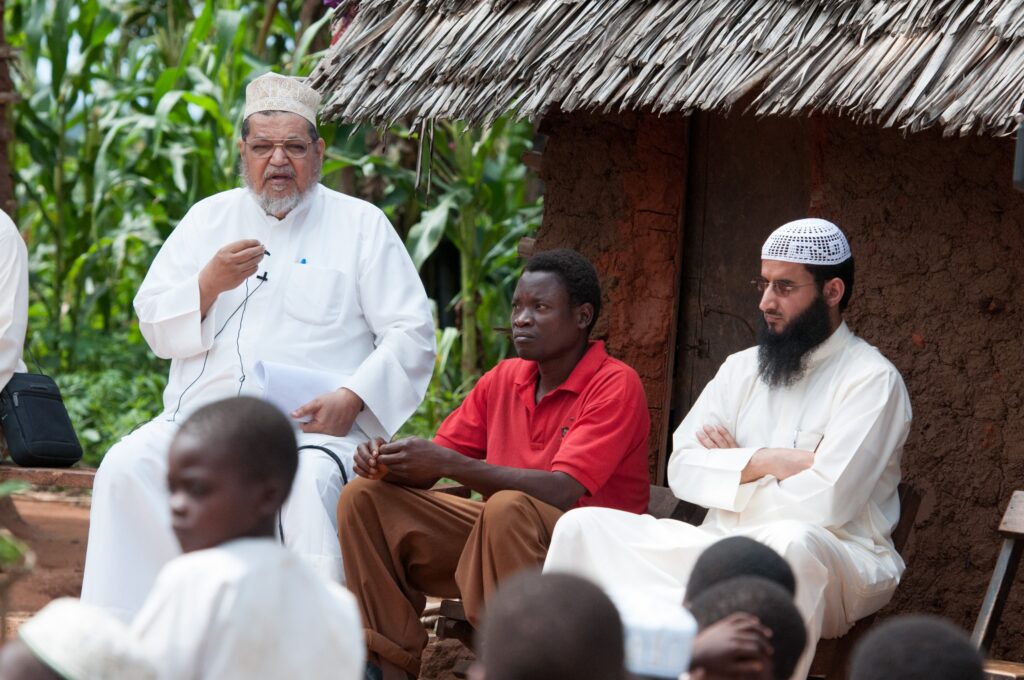
The place
A country with no door to the sea
The Republic of Malawi is a landlocked African country — with no outlet to the seas — in the southeast of the continent, bordered by Zambia to the northwest, Tanzania to the northeast, and Mozambique to the east, south and west. It has no major water source but Lake Malawi (Nyasa), one of the great African lakes and the third largest, which separates the country from Tanzania and Mozambique.
118,000
km² of land, and no coast
14M+
people, heavily reliant on aid
40–45
years of life expectancy, against ~67 globally
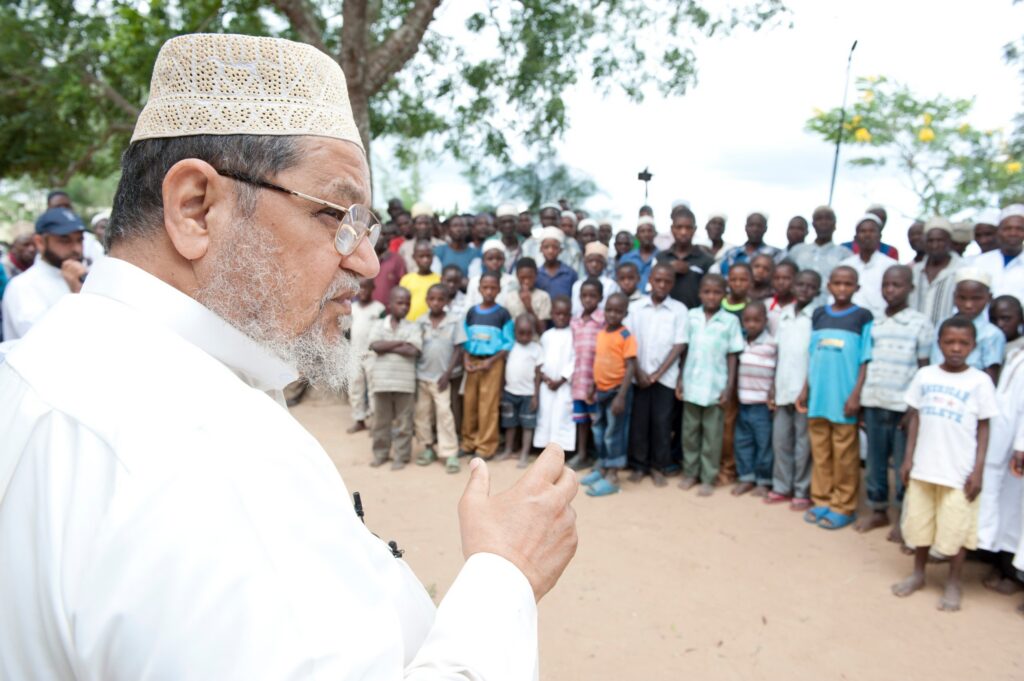
“Dr. Abdul Rahman Al-Sumait set out, with companions, to carry out the project of the benefactress Umm Ali… So where was their destination? And why did they choose it?” The answer was Malawi — and its condition today, as the biography says, differs little from yesterday: among the least developed countries in the world, on the list of the poorest twenty-five nations, with more than half its people below the global poverty line.
Al-Sumait did not go to Malawi seeking it out; a gentle destiny led him there. A noble Kuwaiti benefactress came to his clinic asking for someone to build her a mosque for God’s sake. At first he declined and tried to excuse himself, “but to no avail”; she saw the good in him and insisted, entrusting him with her trust and her generous donation.
It never crossed his mind that this visit would change his entire life — indeed, the lives of millions — moving him from a doctor benefiting people in his clinic to “a wonder of his age.”
She was known by her kunyah “Umm Ali,” and Al-Sumait concealed her name for thirty years, honouring her wish for the reward of hidden charity.
“Dr. Abdul Rahman Al-Sumait kept the secret for thirty years, and you did not keep it for a single day!”
What she said to the one who disclosed her name after his death
Her mosque in Malawi was thus the first fruit of Al-Sumait’s humanitarian work, and the first wellspring.
In Malawi the doctor saw with his own eyes millions of people dying of hunger, poverty, ignorance and disease, living on the aid of missionary expeditions. Those first scenes struck him with a shock “like an engraving on stone,” and he was aghast at what had become of the Muslims in a land “terrorized by hunger and disease that devoured its bodies, and terrorized by ignorance and the absence of callers, so that Islam vanished from the hearts of millions of them.”
Umm Ali’s mosque was no mere building; it was the wellspring from which the vast energy of good burst forth. On its heels the doctor founded the “Committee of the Muslims of Malawi,” which expanded into the “Committee of African Muslims,” and finally became the “Direct Aid” Society (Al-Aoun Al-Mubasher), which bears this name to this day. From that first brick in Malawi he set out raising minarets across more than forty African countries.
Thus Malawi was more than a first stop: it was the spark. And from it the rest of the story begins — the story of a man who devoted himself to a forgotten continent, until he earned the title “Abdul Rahman the Conqueror.”
Umm Ali أم علي
The kunyah of the Kuwaiti benefactress whose donation built the first mosque. Her given name is withheld here, in keeping with her own wish.
Kunyah كُنية
An Arabic byname formed with Umm (mother of) or Abu (father of) — used in place of a personal name.
Nkhatabay
A town on the northwestern shore of Lake Malawi, where he heard the Friday sermon described on this page.
Al-Kawthar الكوثر
The magazine of the Africa Muslims Committee, supervised by Dr. Al-Sumait; two of the incidents below were published in it.
Source — one book, one chapter
Everything on this page is drawn from the documented biography in the project’s reference book, including what it quotes from Al-Kawthar.
A brief profile
Why Malawi was a gateway
Six figures, as they appear in the source — quoted here as part of the record rather than as current statistics.
118,000
km² — and not one metre of coast
Bordered by Zambia, Tanzania and Mozambique. Its only great water is Lake Malawi (Nyasa), the third largest in Africa.
14M+
people
Heavily reliant on foreign aid.
3rd
largest African lake
Lake Malawi separates the country from Tanzania and Mozambique.
40–45
years of life expectancy
Against roughly 67 worldwide.
54%
below the poverty line
And one of the lowest per-capita incomes on earth.
25
the poorest nations in the world — Malawi is on that list
Among the least developed countries anywhere. Its condition today, as the biography says, differs little from yesterday.
Figures as cited in the reference biography. To be checked against the latest documented data before wider publication.
Whoever goes to Africa must prepare himself and his mind to see the strangest of wonders.
Dr. Abdul Rahman Al-Sumait — as quoted in the reference biography
From the land of Malawi
Five scenes he never forgot
Incidents that mingle the comic and the painful, and reveal the depth of the need.
“By God, I have no cow!”
He asked the imam of a mosque to recite Surat al-Baqara — The Cow — so he might hear his voice reciting the Qur’an, and the man replied: “By God, I have no cow!” Then he did not know Aal Imran, nor even al-Fatiha, and said apologetically: “I know how to prostrate and bow; the rest of the village do not, so I am the least ignorant among them!” Elsewhere they could find no one who had memorised al-Fatiha but a woman, so they put her forward to lead the prayer.
A preacher praying for the Ottoman Sultan
Friday prayer overtook him in the town of Nkhatabay in northern Malawi, where he attended a sermon in Arabic that neither the preacher nor the worshippers understood. He grasped nothing of it but its end: a supplication for the Ottoman Sultan Abdul Aziz — an old sermon passed down generation after generation without meaning. (Al-Kawthar, Issue 7 — May 2000)
Is one hundred more than sixty?
In a remote village 56 km away, which he reached in five hours, a shopkeeper who did not know arithmetic could not add the price of three bottles; and when the total turned out to be sixty, he would not believe that the hundred they were paying was greater, and thought they were deceiving him — until a caller from the village rescued them. (Al-Kawthar, Issue 2 — December 1999)
The chief’s conversion, and five hundred with him
When he visited a village, the tribal chief embraced Islam, and with him five hundred people — for an Arab’s arrival among them was a momentous event that opened hearts.
The straw mosque… and the cattle
In the village of Shakwawa he found Muslims who did not fast — because they did not pray — because they believed there could be no prayer without a mosque. So he marked the qibla for them and built with them a mosque of straw that filled with worshippers — but the cattle ate it. So they built in its place a mosque of thorns that livestock would not eat, to preserve the people’s prayer.
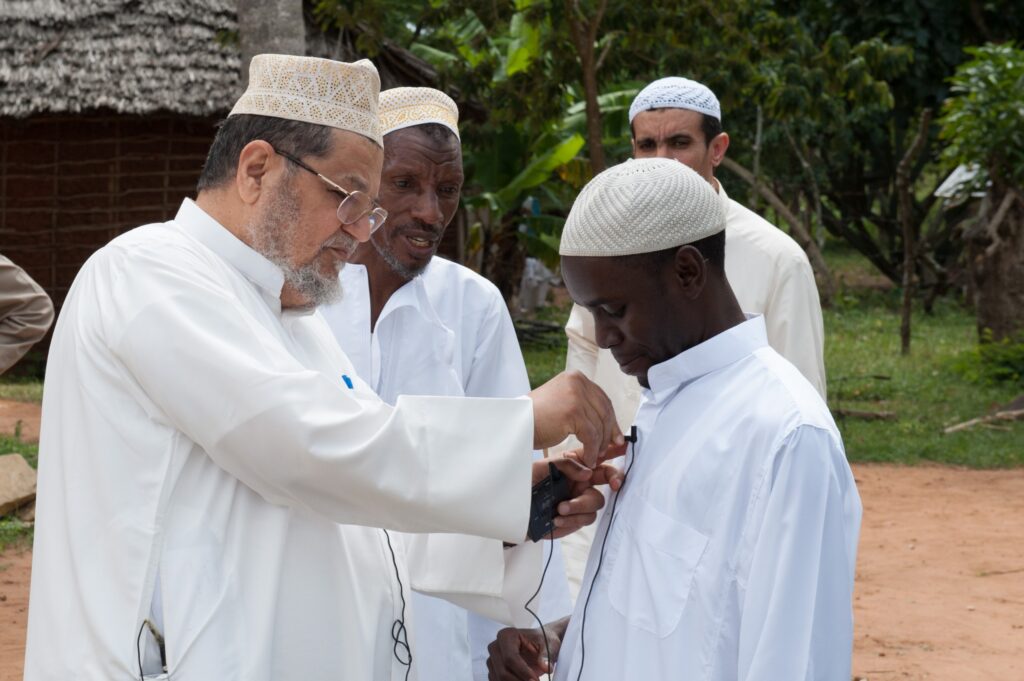
Malawi, and after
From one mosque… to an edifice that fills the continent
The Committee of the Muslims of Malawi expanded into the Committee of African Muslims, and finally became the Direct Aid Society — the name it bears to this day.
1
mosque, built from one woman’s trust
500
who embraced Islam with their chief
40+
African countries reached from that first brick
From the field
The continent that followed
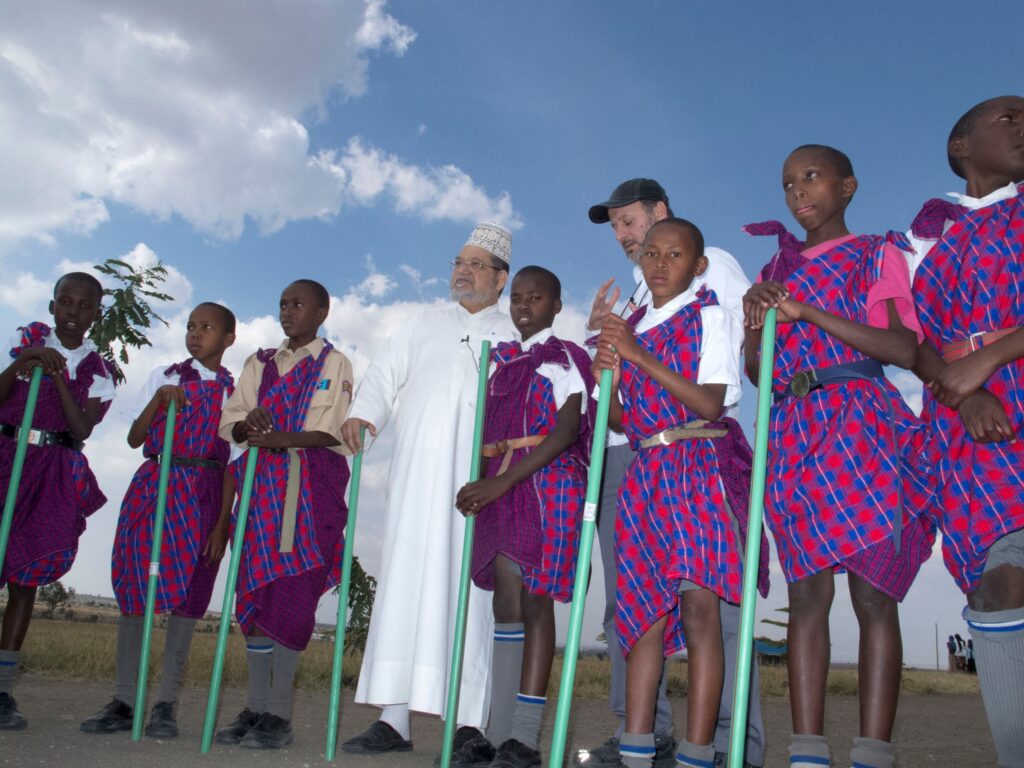
Image sources and editorial notes are listed on Sources & Method.
Sources
Drawn from the documented biography of Dr. Abdul Rahman Al-Sumait in the project’s reference book, including what was quoted from Al-Kawthar magazine, which the doctor supervised (Issue 2 — December 1999, and Issue 7 — May 2000). Figures for area, population and development indicators are cited as they appear in that source.