الخِصالُ الخمس
His character
The book is arranged by character, not by year
Its central section is five consecutive chapters, one per trait, each built from incidents rather than praise. This page keeps that order — and says so. A man who ran one of the largest relief organisations in the Muslim world used a pen worth fifty fils, was questioned by his own auditor over a shoe repaired for a quarter of a dollar, and spent twenty-six days in a cell.
Reference biography · 437 of 620 pages held · all translations ours
Humility
تواضعه
Scrupulousness
ورعه
Responsibility
إحساسه بالمسؤولية
Forbearance
تسامحه وعفوه
Steadfastness
صلابته
01
He would not let praise sit on him
تواضعه
Three people noticed the same thing, separately.
Yousef Al-Kandari
“I wanted to teach myself not to be taken in by what was said.”
«ما سمعت الرجل ماذا قال؟! مدح وأثنى، أردت أن أعلّم نفسي أن لا تغترّ بالكلام الذي قيل.»
A donor praised him in front of other people. When the man had given his donation and left, Al-Sumait disappeared — a member of staff went looking for him and found him cleaning the lavatory.
One witness · «عبد الرحمن الفاتح» · p. 97
Dr Fahd Al-Faraidi
“My son, the owner of a thing has more right to carry it.”
«يا ابني صاحب الشيء أحقّ بحمله.»
Ten minutes late for a lecture in Dammam because of traffic, he found Al-Sumait waiting for him in the street, in the sun, holding two heavy bags of copies of Al-Kawthar. He tried to take them and was firmly refused.
One witness · 1427 AH · p. 100
The biography itself
No hotels. No private aircraft. A pen worth fifty fils.
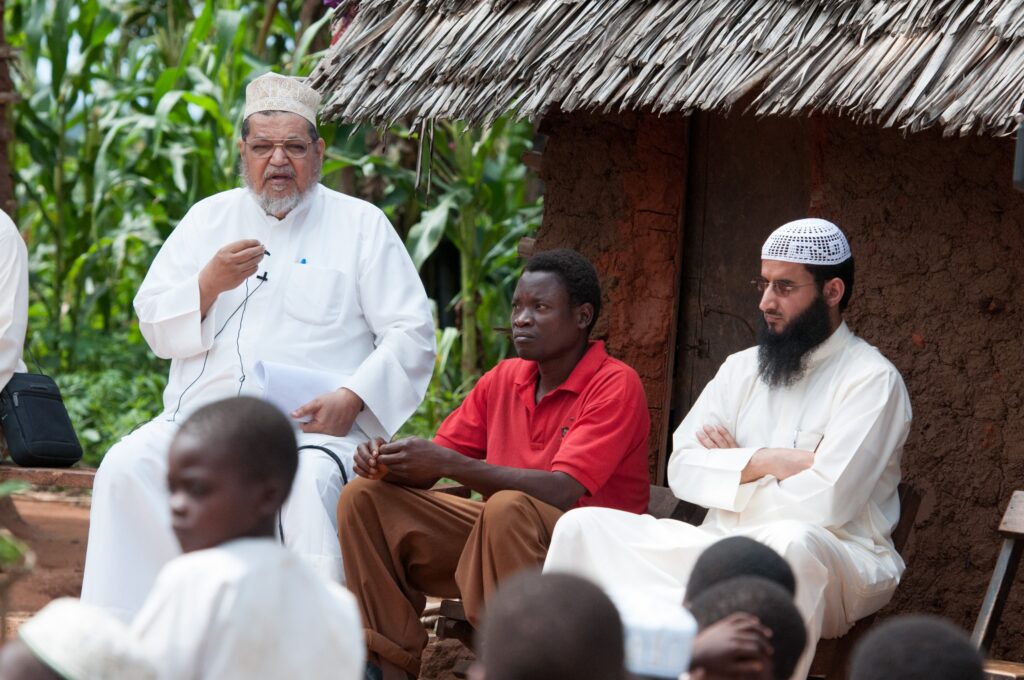
Chairman of the board of one of the best-known relief organisations in the Muslim world, and none of the marks of the post. He came from a family of comfortable means and did not mind what he wore. In African villages he served tea to his own guests, and knelt on the ground to talk to them.
Recorded in the source · pp. 94–95, 99
Two of the three rest on a single witness each. The site marks those with a gold dot rather than deleting them or asserting them — the same rule used on the awards and testimonials pages.
02
He was harder on himself with money than any auditor could be
ورعه
Four entries, and what the organisation did about each.
Direct Aid · the record as the biography gives it
pp. 104–108
| Sudan | One pair of shoes, repaired.QueriedThe audit department telephoned the chairman of the board. He argued that he was the chairman; the auditor answered that no regulation permitted it, and that without a document from the board he would record the amount on paper. He was then summoned to the office, held his line — and was given a full month’s salary out of the chairman’s own pocket for holding it. pp. 107–108 · the auditor is unnamed in the source | $0.00 |
| Ethiopia · 1997 | Funds moved by bank, not by the black market.Someone offered his Ethiopia office a better rate. He instructed that the transfers keep to the official route even at a loss of five per cent or more. Reported by Sheikh Mohammed bin Hamad Al-Khamis. pp. 106–107 | −0% |
| 18 months later | Organisations closed by the Ethiopian prime minister over irregular procedures.His was not among them. p. 107 | 0 / 0 |
| Canada · Britain | Years of study; restaurants entered.Five years in Canada and three in Britain without eating in one. When a visiting scholar permitted the cheese, he bought it for his children and ate none of it himself. p. 104 | 0 / 0 |
Ethiopia · 1997
“Stay on the right road and you will come through safely.”
«خليك على الطريق الصحيح تسلم!»
SourceSaid to Sheikh Mohammed bin Hamad Al-Khamis, who had brought him the suggestion. Reference biography, p. 107 · our translation
03
The arithmetic that would not leave him alone
إحساسه بالمسؤولية
He did the sum in public, in a magazine he signed.
مجلّة الكوثر
«زرتُ في يوم من الأيام أحد معسكرات الإغاثة في إفريقيا، ورأيت بعيني المناظر التي تفتّت القلوب المتحجّرة.»
«وحاسبتُ نفسي وقلت: كيف أرضى لنفسي بأن آكل ثلاث وجبات يومياً، بينما إخواني المحتاجون في هذه المعسكرات يسير بعضهم على أقدامهم أربعين يوماً بحثاً عن لقمة طعام يسدّون بها رمقهم؟»
«وهم يعيشون على أوراق الشجر والحشائش — إن وجدوها — فمنهم من يموت في الرحلة، ومنهم من يعود منها وقد فقد قواه وازداد جسمه هزالاً.»
“One day I visited one of the relief camps in Africa, and I saw with my own eyes scenes that break hearts of stone.”
“And I called myself to account, and said: how do I accept for myself to eat three meals a day, while my brothers in need in these camps — some of them walk on their feet for forty days searching for a mouthful of food to keep themselves alive?”
“Living on tree leaves and grass if they find them; some of them die on the way, and some return having lost their strength, their bodies more wasted than before.”
Set by us from the text as the biography quotes it — not a scan of the magazine. The Arabic is his; the English is our translation.
Reference biography, p. 111
0meals a day — his own
0days on foot — theirs
0hours by train on scraps of bread — how he chose to travel · p. 114
The full ration
In Darfur, officials and tribal sheikhs were puzzled by his representatives’ insistence that every displaced family receive its allotted share complete, with nothing withheld. What is given to families is a trust, and must reach those entitled to it in full.
Sourcep. 111
One people
Rather than spread himself thin he gave most of his remaining time to the Antemoro, settled among them and built a house there. What followed was a list, not a gesture: mosques, orphan sponsorship, teaching, health care, wells — and a cemetery for Muslims, because there was none.
Sourcep. 115 · reported by Sheikh Mohammed bin Hamad Al-Khamis, 2013
04
He would not spend himself on quarrels
تسامحه وعفوه
Five quarrels were available to him. He took none of them.
01
The sectarian dispute exported from home
In northern Madagascar a Muslim might pray Friday in the mosque, attend church on Sunday and worship a tree on Monday — “we do not know which is the truth, so we worship all three so as not to lose anything.” Against that, young visitors would arrive, fasten instead on the fact that some local Muslims marked the Prophet’s birthday, and stir it into a public quarrel: people fighting, police occupying and closing mosques, an ambassador filing a report. pp. 121, 123
02
Party and faction
He tied himself to no party or group, considering himself a servant of the wider community. p. 119
03
The missionary clergy
Across three decades in Africa he avoided confrontation with them, and instructed those working with him never to answer harm with harm. p. 128
04
The priest who drove past them
Their car broke down; a priest and his party passed and refused to help. Hours later they repaired it themselves, drove on — and found the priest’s own car broken down ahead. They stopped and repaired it. Single source · p. 123
05
The people who asked him to prove himself
“We are not waiting for certificates from anyone. We worked in the field, and we wait only for God to accept it from us.” p. 125 — the sentence the testimonials page is built on.
What he did instead
He asked the elders what colour to paint the school wall
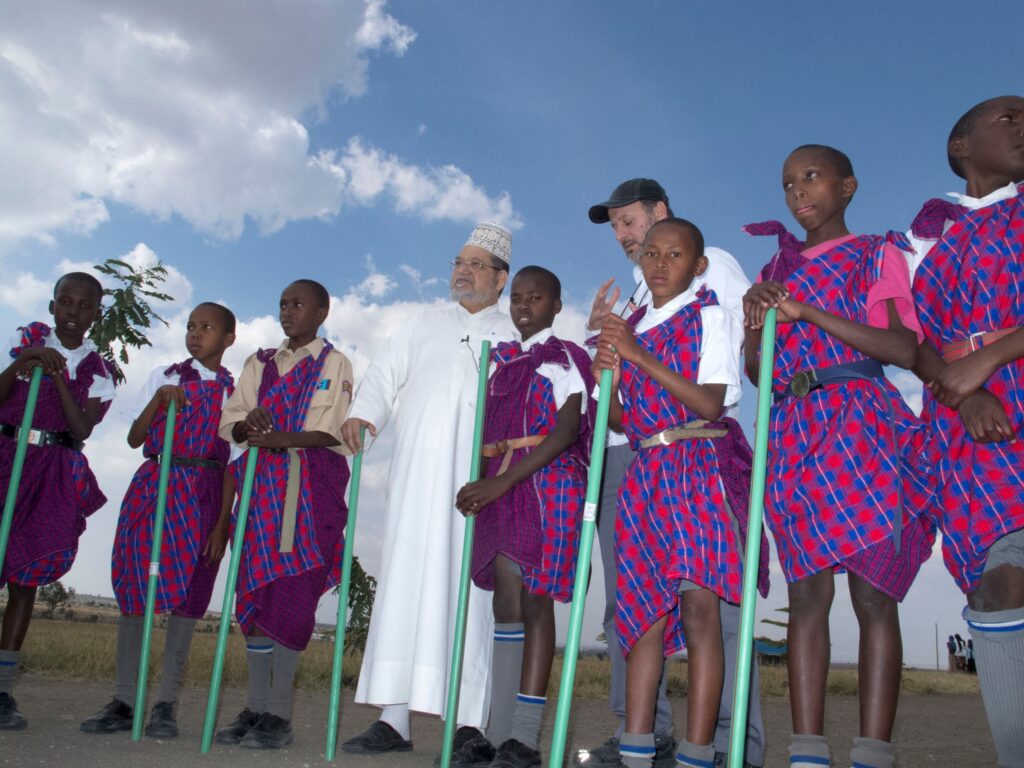
To guarantee a new centre popular support he formed a council of the area’s elders and men of standing, and met them once or twice a year — about a simple gate, the colour of the school wall, how many trees to plant. “And I was happy, because they did not interfere in the curricula or the work programmes.”
Signed by himAl-Kawthar, issue 3, January 2000 · p. 129 · our translation
The centre was later handed to a foreign association that neglected them.
The local people expelled it within a short period. — “People do not only need food and aid. People need wisdom in dealing with them.”
“I would have sentenced myself, and been besieged in a very small arena.”
«لو سمحتُ لنفسي بالدخول في الخلافات التي بيننا… لحُوصرتُ في ميدان صغير جدّاً.»
Sourcep. 121 · our translation
05
Five things that should have broken him
صلابته
He was, the book notes plainly, small in build and light in weight.
Iraq · 1970
Arrested the year before his final year at medical college
For his religious activity at the university. The source states he was brutally tortured, and that flesh was cut from his hand and his feet. p. 132
Kuwait · the occupation
Detained a second time — twenty-six days
“The sun’s rays did not touch us except on the day they told us to prepare to go to Bnaid Al-Qar to meet the director general of security.” pp. 132–133
The field
Thirty years in the forests
He met it by learning it: five main kinds of large venomous snake, and more than sixty-two ordinary kinds, most of them non-venomous. Expertise, not dread. p. 133
His body
Two heart attacks, and many illnesses
His own words. The full list (p. 135) is carried on the Passing chapter and linked from here rather than repeated. p. 105
Failure
“There is no success without failure.”
“An ant cannot climb a wall without falling more than once, and the road to success always passes through stations of failure; there is no good in a man who surrenders at the first battle… but all of this is made light by the greatness of the aim you are pursuing.” p. 105
What he said about the twenty-six days
“Prayers in which we tasted a sweetness we had never tasted in our lives — the sweetness of prostration there, in the cell, with the tears pouring from our eyes.”
«وصلاةٍ لم نذق في حياتنا حلاوةً كحلاوة السجود فيها ونحن في الزنزانة، والدموع تنهمر من عيوننا.»
Sourcep. 133 · our translation — “not from fear for a fate we did not know, but out of fear of God and to draw near to Him.” No photograph exists for this movement, and there is no reconstruction.
Why it did not break him, according to the book
Not a gift, but a sequence: the Scouts as a boy — self-reliance, adapting to the environment, making use of the least available resources; a period at boarding school; then successive travel for study — medical college in Baghdad, postgraduate study in Canada, and work as a physician. pp. 131–132
He was not a mild man. He was a man who had decided, quite early, what he was not going to spend himself on.