01
His Life — Chapter 01 of 08
Early Life &
Upbringing
Kuwait · 1947 – early 1960s
A devout household, a boy who would not leave the mosque, and a boarding school far from the city. The years that shaped everything after.
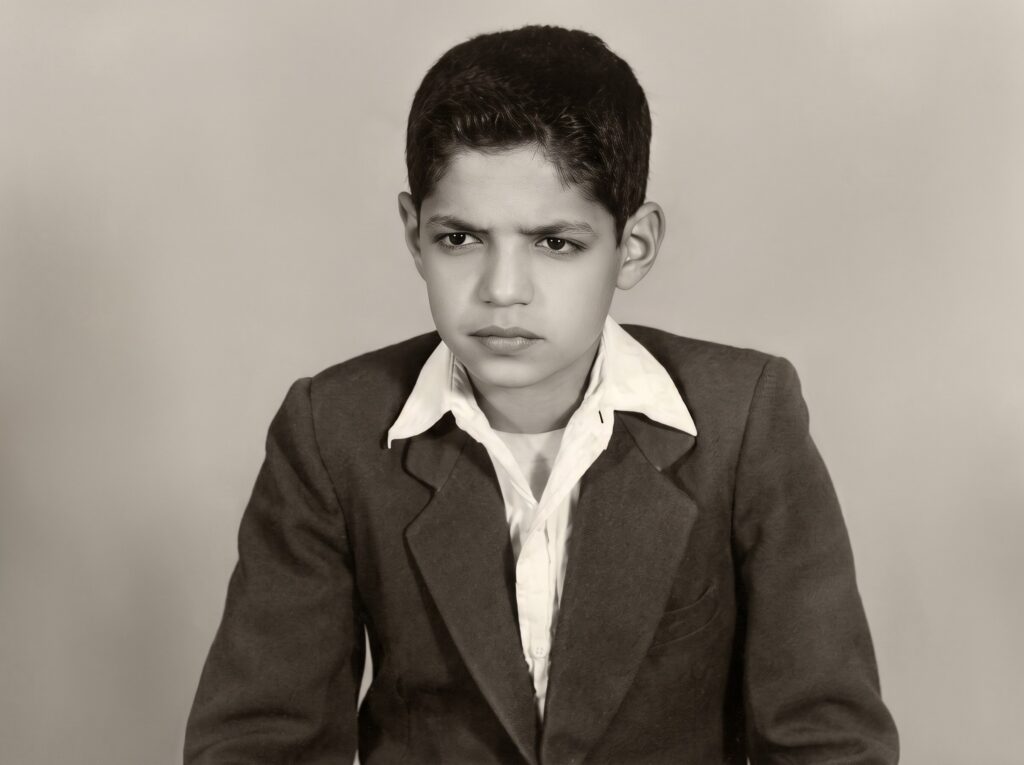
1947
Birth
Dr. Abdul Rahman bin Hamoud Al‑Sumait — may God have mercy on him — was born on the tenth of Dhul‑Hijjah 1366 AH, corresponding to the tenth of October 1947, in Kuwait, into a devout family that loved doing good.
His father — may God have mercy on him — was a righteous man, devoted to the mosque, who raised his children upon that path. The piety and virtue of this family played a great part in shaping the character of the young Abdul Rahman from his earliest years.
Source: the biography, p. 13
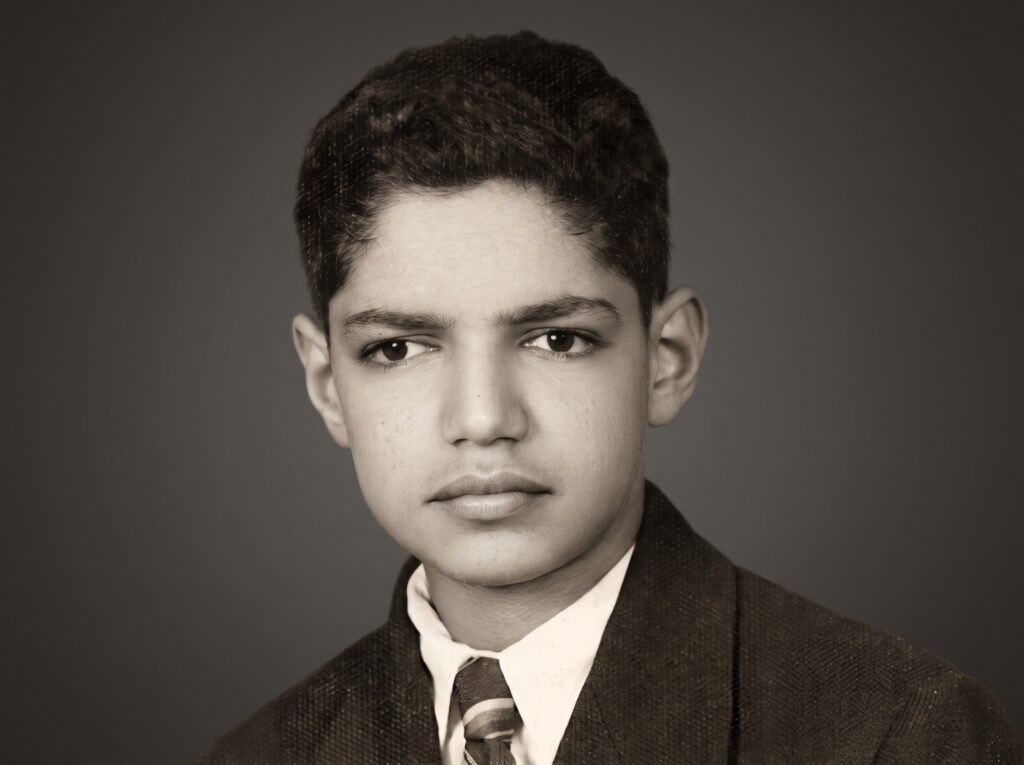
As the poet Abu al-Ala al-Maarri said:
A youth among us grows up shaped
by that to which his father had accustomed him.
The Home
Example · His mother · An open door
In this house the force of example ran ahead of the force of preaching — what is lived speaks more plainly than what is said. Nor was he an exception among Kuwaitis: Kuwait has been known for its endowments, its zakat, its charity and its benevolent works since its founding, not since its economic boom; and he walked the road his fathers and grandfathers had laid.
His mother’s mark was no lighter. She was unlettered and could not read, yet she would sit with her children and try to help them with their studies; she kept to her husband’s way in maintaining the ties of kinship, even with distant relatives, and her concern was to spread love among her sons and draw the brothers close.
In his own words
We were raised to respect our parents, to love one another, and to keep the ties of kinship that our father and mother held to even with our distant relatives; and our house was open to every visitor and traveller.
Dr. Abdul Rahman Al‑Sumait — may God have mercy on him · Pages from My Life, Al‑Majd channel
Source: the biography, p. 24 — from Pages from My Life, Al‑Majd channel, presented by Fahd Al‑Sunaidi. What is said of his mother is taken from his own words in the same place.
Two Counsels
What his father charged him with
Asked about his father, he said no more than this: “My father was an ordinary man, and he would order me to pray” — and then he named two things.
01
Never abandon the prayer
“Do whatever you wish, but never abandon the prayer”
Said to a boy on whom prayer was not yet obligatory.
02
Guard your wealth from the unlawful
“And beware of letting a single halala of unlawful money enter your wealth, for it will spoil your money and destroy it”
A prohibition about money, from a man his son called “ordinary.”
And his answer to the second — in his own words
If the bank gives you a return of about 6% on your deposits, then God — glorified be He — gives you for it what may reach seven hundred times over.
Dr. Abdul Rahman Al‑Sumait — may God have mercy on him · the biography, pp. 20–21
The father’s prohibition and the son’s promise are two faces of one coin: let nothing unlawful in, and never fear to give out. Two counsels that would become, thirty years later, the rule by which he handled other people’s money.
Source: in his own words · Pages from My Life, Al‑Majd channel, presented by Fahd Al‑Sunaidi. The remark about the bank: the biography, pp. 20–21.
1950s
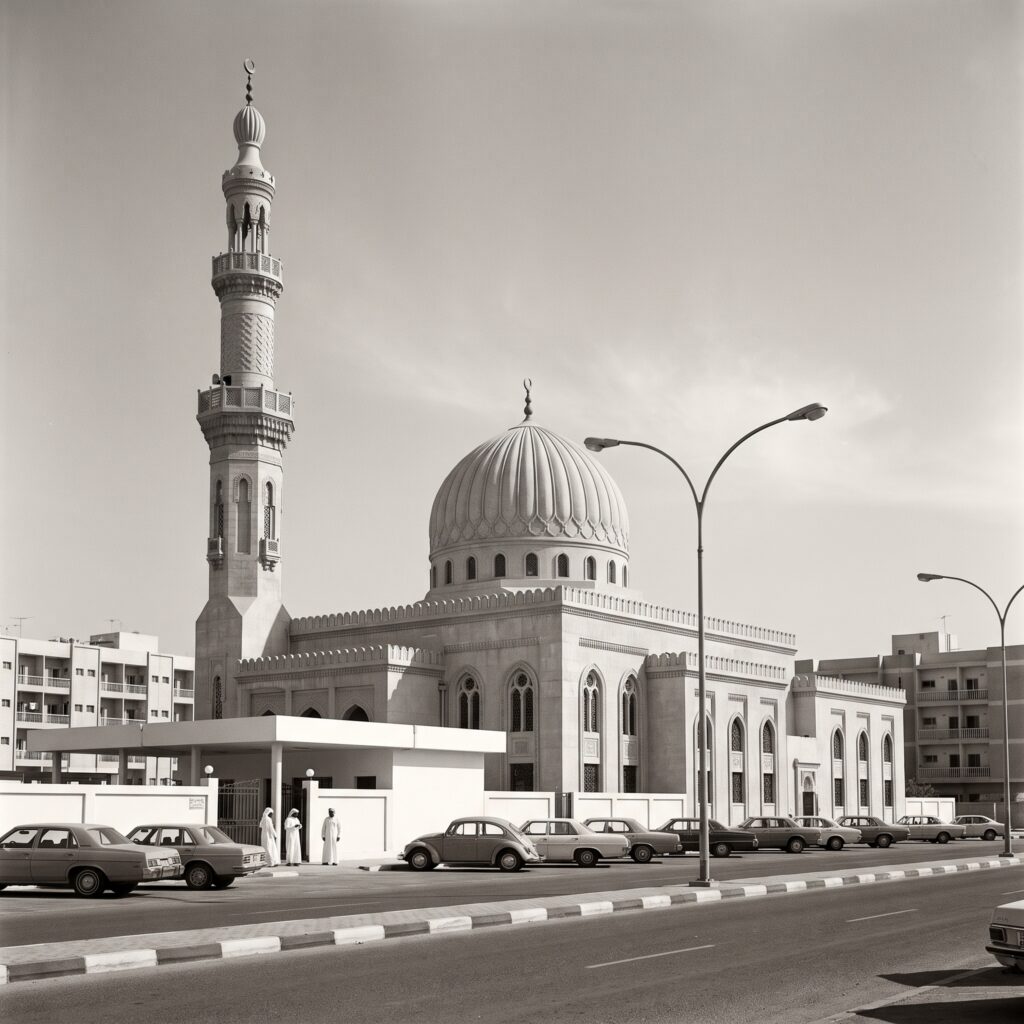
The mosque and “Al‑Mulla”
He kept close to the mosque from his earliest childhood, until he was given the nickname “Al‑Mulla” — a title given to the devout.
Al‑Mulla · المُلّا
Persian in origin, meaning “teacher.” Kuwaitis of old used it for the teachers of the Quran schools — and, by extension, for the devout.
Kuttab · كُتّاب
A traditional elementary school where boys learned to read, to write and to memorise the Quran.
Source: the biography, p. 13 — the gloss set here in place, not in a side card.
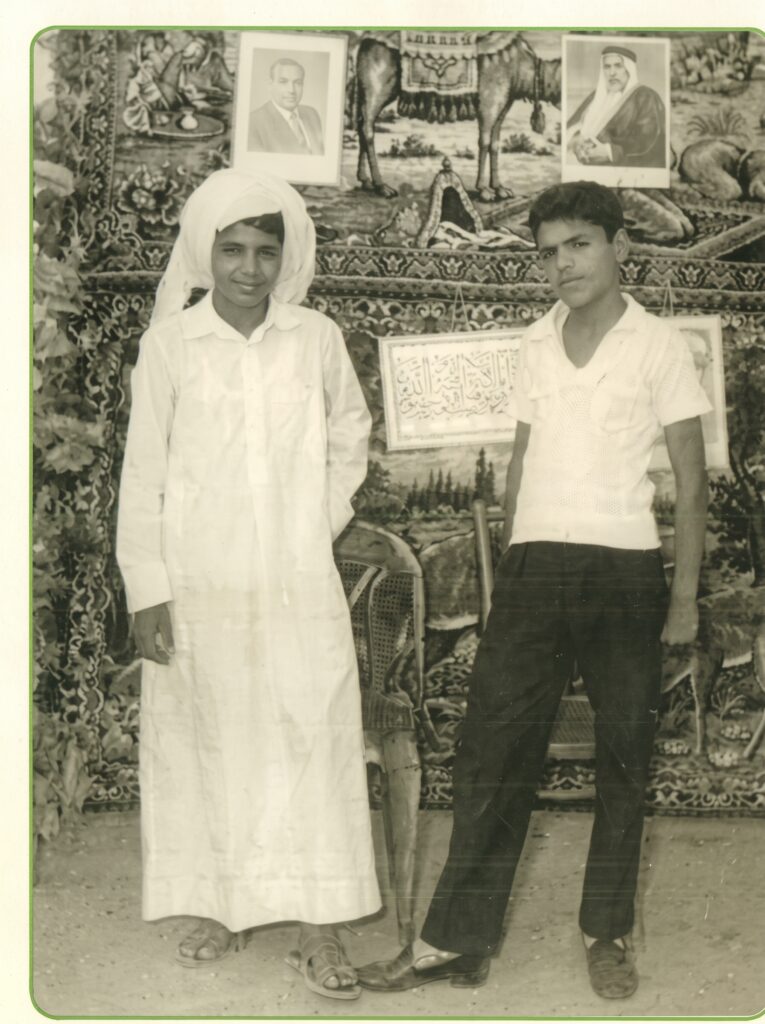
There is no doubt that beginnings play a great role in a person’s life. My father, Dr. Abdul Rahman Al‑Sumait — may God have mercy on him — was raised in a conservative, devout environment,
and he himself stood out for his piety among his brothers and friends from a young age. Prayer was not, of course, required of children his age,
yet he was committed to it from childhood, though he was not yet five — indeed, he would pray Fajr at the mosque!
Dr. Abdullah bin Abdul Rahman Al‑Sumait — his son · the biography, p. 13
Two Windows
c. 1958–59 · before Shuwaikh
The first — the book
He would reach the library before it opened
first through the door
and when its doors were shut
last to leave
Most of his money went on books from the bookshops — above all those that came from Egypt; and his reading ranged more widely than his peers’: the religious sciences, comparative religion, politics and economics. Once he took up a book — however many its pages — he would not put it down until he had finished it.
Source: the biography, pp. 14–15
From an academic study
Nor did his reading stop at what agreed with his convictions. He took up thought hostile to Islam deliberately — Marxist and leftist theories among others — “in order to seek out the truth and widen his understanding and knowledge.” The result was the opposite of what might be expected: the more he read of them, the more convinced he became of what he already held.
It is also recorded that he would not leave a page of a book or a newspaper where it lay without picking it up — “at home, at school, or even in the middle of the road.”
The researcher Ali Muhammad Al Hasan Al‑Shehri — Relief Work in the Life of Dr. Abdul Rahman Al‑Sumait and Its Effect on the Acceptance of His Call
The second — the world
While still in the sixth grade
Libya
Jordan
Palestine
Italy
Britain
Turkey
From an academic study
Al‑Shehri records that he travelled early to most of the Arab countries and to some European ones — these among them — while he had not yet passed the sixth grade of primary school.
Al‑Shehri’s study of his scholarly and relief career
The continent that would come to know him
was not the first land he ever saw.
1960s
Shuwaikh Secondary
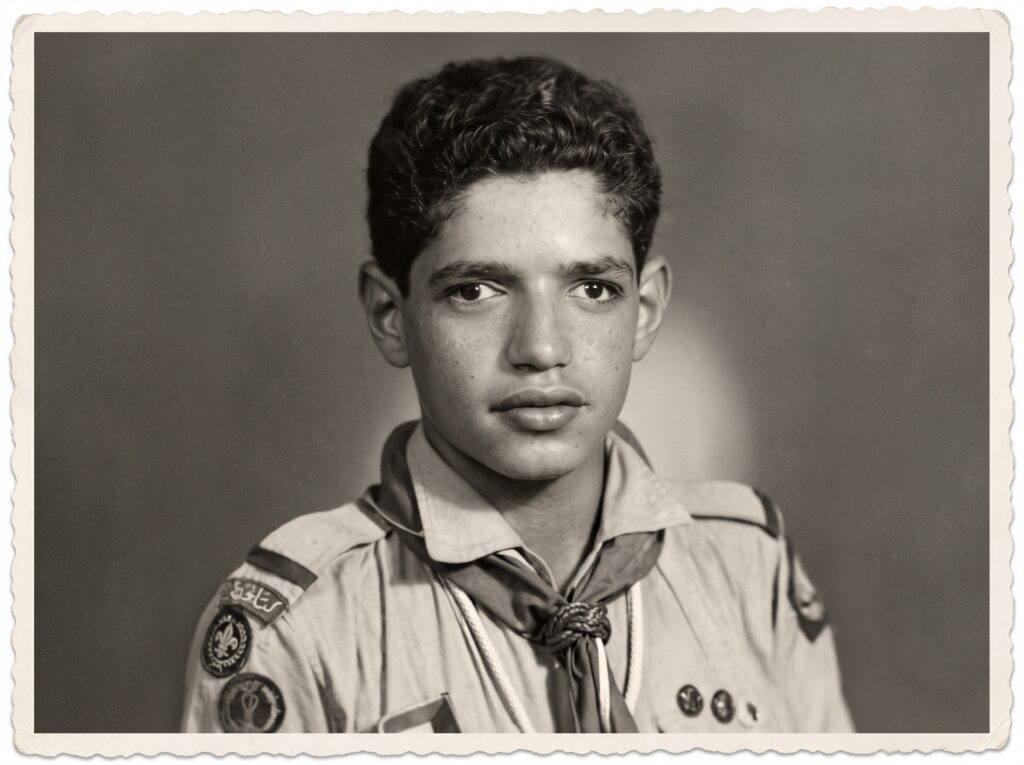
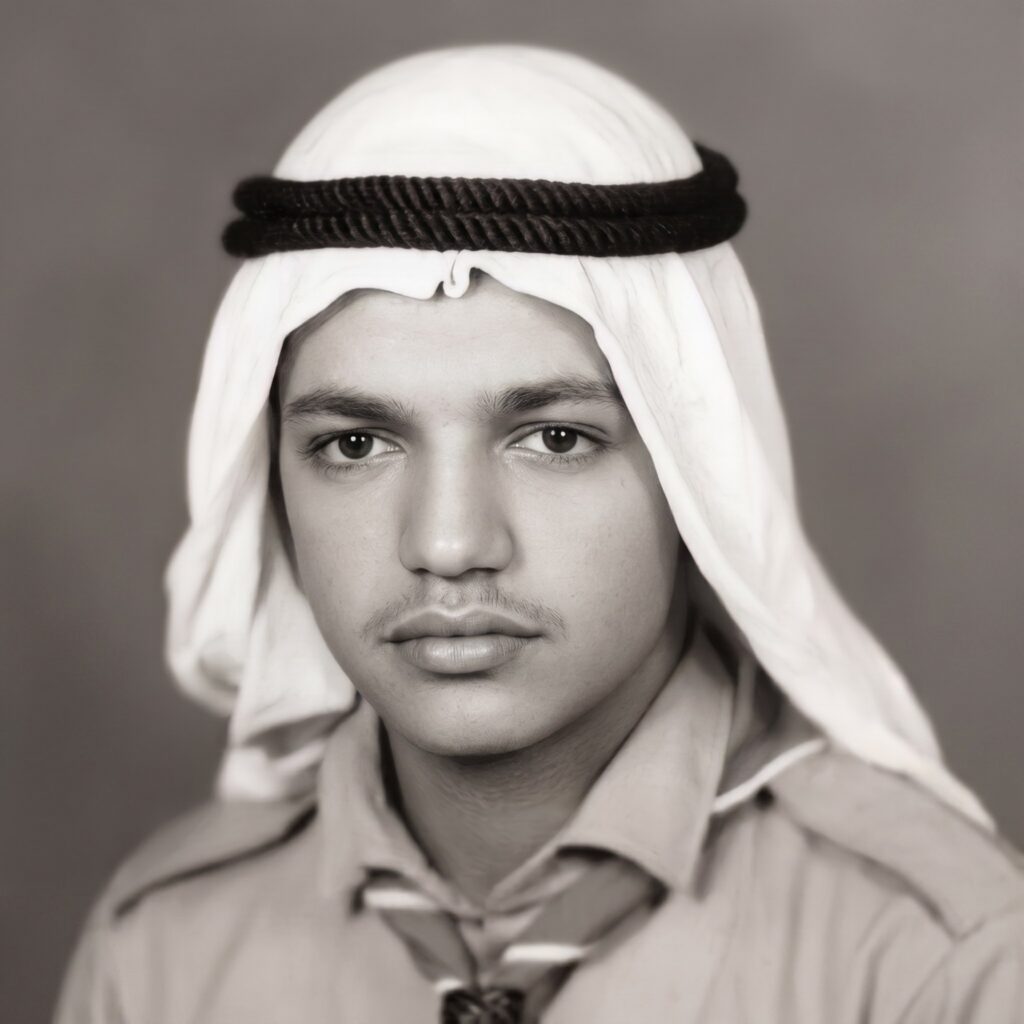
He then entered Shuwaikh Secondary School in the early 1960s — a school with a boarding house, whose students went home to their families on Thursdays and Fridays each week.
6 km
west of Kuwait City — and hard to reach
Getting there was difficult for the students, and the boarding regime added a measure of hardship for some of them — yet Abdul Rahman Al‑Sumait’s character, steeped in patience and endurance, was not one to let that hinder him from completing his course.
A week inside the walls, two days outside
Boarding
all week long
Thursday – Friday
home from the boarding house to his family
6 km
west of Kuwait City
Source: the biography, pp. 56–57 · and the testimony of his brother Abdulsalam Hamoud Al‑Sumait on the programme Abdulrahman Al-Fatih
In His Father’s Footsteps
The same act — three times
The father · late 1950s
In the son’s words, about his father
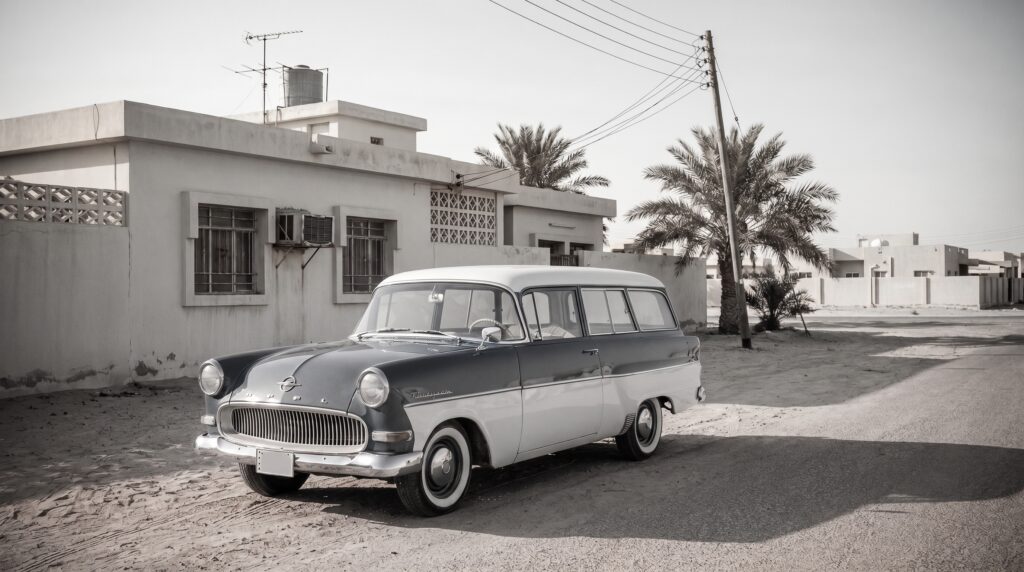
Not many people owned a car, and our father had an Opel. Any neighbour who needed to get to the hospital or anywhere else, he would take there in it. One of our neighbours was about to give birth, and they sent for our father to take her to the hospital; she went with him, for her husband was not there.
Pages from My Life · the biography, p. 24
Then the boy did what he had seen
The son and his friends · while at secondary school
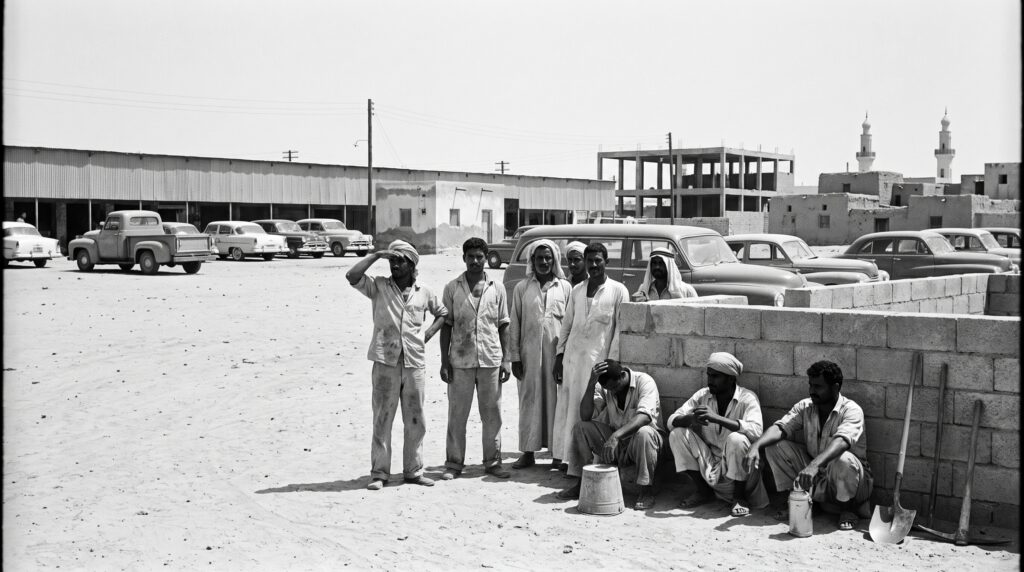
The sight of labourers waiting for transport under the Kuwaiti sun pained him. So he agreed with a group of his fellow scouts to pool their money until they had bought a car, set aside to carry the workers from their housing to their jobs at no charge.
12 boys took part
1,200 Saudi riyals
1
for himself and his family
2
for his brothers and friends
3
for the workers and the poor — a door few think to open
The threefold division is the biography’s own · p. 21
Then he did it again in Canada
The students in Canada · after this chapter
When this was well received, he and his fellow students in Canada bought a car by joint contribution for the same purpose.
Pages from My Life · the biography, p. 21 — an episode outside this chapter’s span, given here because it completes the pattern.
1966
the seed of Kuwait University
A campus city in its own right
It held every means of study and of sport and recreation, and many who went on to hold office in the state graduated from it — until this celebrated school became the seed from which Kuwait University grew.
Source: the biography, p. 57
This is the first chapter